How governments worldwide are shaping what AI can say about politics
With the U.S. midterms approaching, about one in five voters has asked AI chatbots about elections and politics, a recent survey found.
Stay informed about scientific discoveries, research developments and new findings from around the world.
With the U.S. midterms approaching, about one in five voters has asked AI chatbots about elections and politics, a recent survey found.
Millions of large feral animals roam Australia. Pigs, camels, deer, horses, water buffalo, cattle and goats were introduced deliberately as transport, livestock or to hunt. Many have since established wild populations.
Some wars are predictable. There are conflicts past and present which have been more or less expected because of economic and social conditions, a country's history or that of its neighbors.
The polar vortex, a swirling mass of cold air encircling the North Pole, is sometimes disrupted by sudden stratospheric warming (SSW) events, unleashing waves of frigid air that penetrate farther south than usual. Temperatures across North America and Europe drop precipitously when this happens, but such events remain hard to predict, meaning we can't easily warn people when SSW is imminent.
A sequence on the Bayeux Tapestry shows King Harold alongside a crowd gazing at the sky, beneath the embroidered caption Isti mirant stella ("those people marvel at the star"). Above Harold sits Halley's Comet, with ghostlike invasion boats in the border belowβa Norman framing of Harold as a doomed usurper whose betrayal invited destruction.
A new Management Science study provides rare real-world evidence that people are willing to give up thousands of dollars to prevent sensitive information about their health and income from becoming public. The research, developed over five years by an international team, has now also laid the foundation for a European research project led by Ehud Guttel of the Hebrew University of Jerusalem.
New results from the STAR experiment at the Relativistic Heavy Ion Collider (RHIC) provide strong evidence that smashing oxygen nuclei together at nearly the speed of light generates a quark-gluon plasma (QGP), a type of matter that existed just after the birth of the universe. The data, just published in Physical Review Letters, show that energetic jets of particles lose energy as they traverse the hot, dense matter left in the collision's wake.
Consumers are increasingly confronted with conflicting information surrounding how much protein they should have and which protein sources are healthiest, most sustainable, and best value for money. Cambridge research has uncovered the truth.
Applying eyedrops is difficult in space, where there is almost no gravity. A KAIST research team has developed a wearable patch that delivers eyedrops to the eye without relying on gravity. The research team was led by Professor Ki-Hun Jeong from the Department of Bio and Brain Engineering, in collaboration with a research team led by Professor Se Joon Woo from Seoul National University Bundang Hospital. The paper is published in the journal Sensors and Actuators B: Chemical.
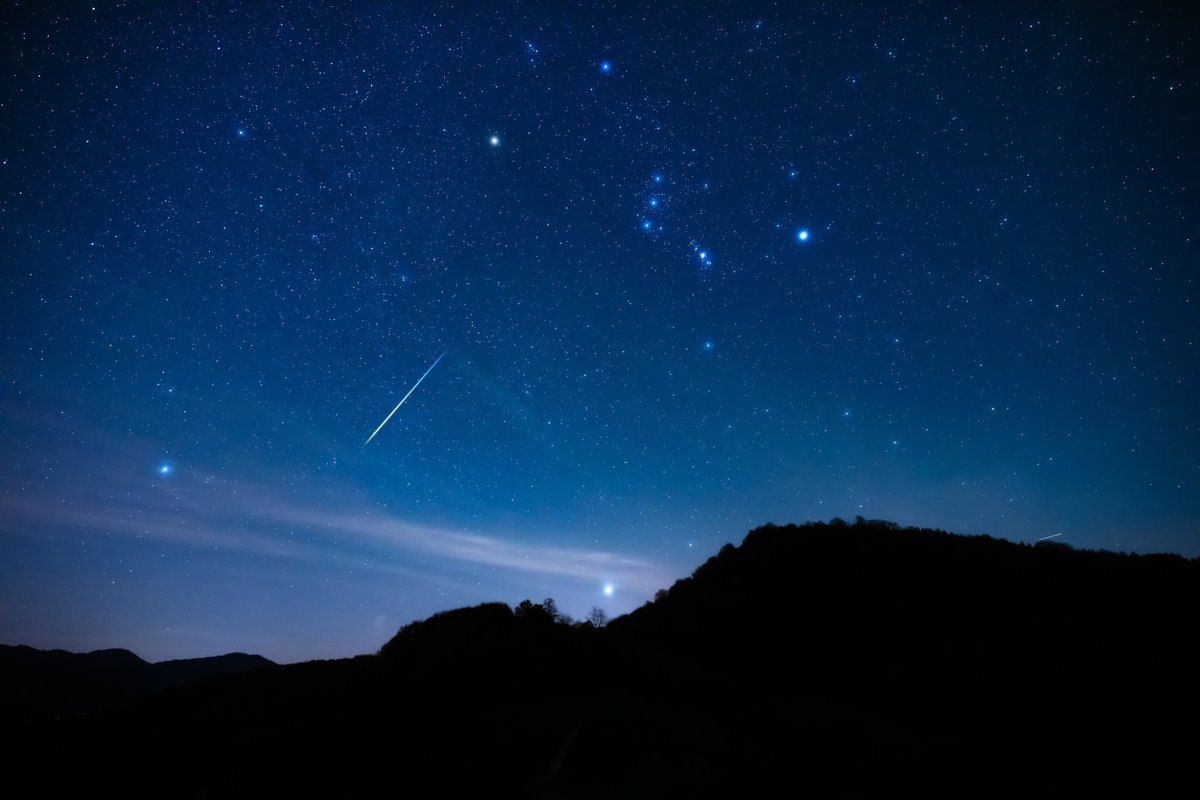
The showerβs shooting stars originate from Halleyβs Comet
The Emmy Awardβwinning actress revealed that a multiple sclerosis diagnosis in 2021 was incorrect. Itβs a surprisingly common experience, experts say
For scientists studying the ocean, finding the right data can sometimes be as challenging as figuring out what to do with it. Want to know seafloor depth, the location of underwater mountains or sea surface temperatures? The information exists, but it can take considerable time and computer coding to pull it together from different sources and get it into the proper format.
From The Traitors to everyday life, we often mistake nervousness, confidence or group suspicion for signs of deception. Dr Nadja Heym, Associate Professor in Personality Psychology and Psychopathology, explains why spotting a liar is harder than we think.
From heat-related illness and deaths to lost work hours and higher insurance and utility bills, climate change is already affecting California's economy. A new statewide report in California's Fifth Climate Change Assessment shows how the costs are rising, rippling across sectors and falling unevenly across the stateβand in San Diego, the community is going to need to prepare for large-scale adaptation to much warmer conditions.
Democratic backsliding can be tricky to spot.
Scientists have long been interested in cellular nanodiscs, tiny particles made from natural cell membranes that mimic many of the functions of living cells. While previous studies demonstrated the therapeutic potential of nanodiscs for drug delivery, detoxification and vaccines, one fundamental question remained unanswered: How does size influence how well they work?
Water isn't always as it seems. Under extreme conditions, such as those found on other planets, it has been discovered to change its atomic structure, giving it the means to alter its appearance and other properties.
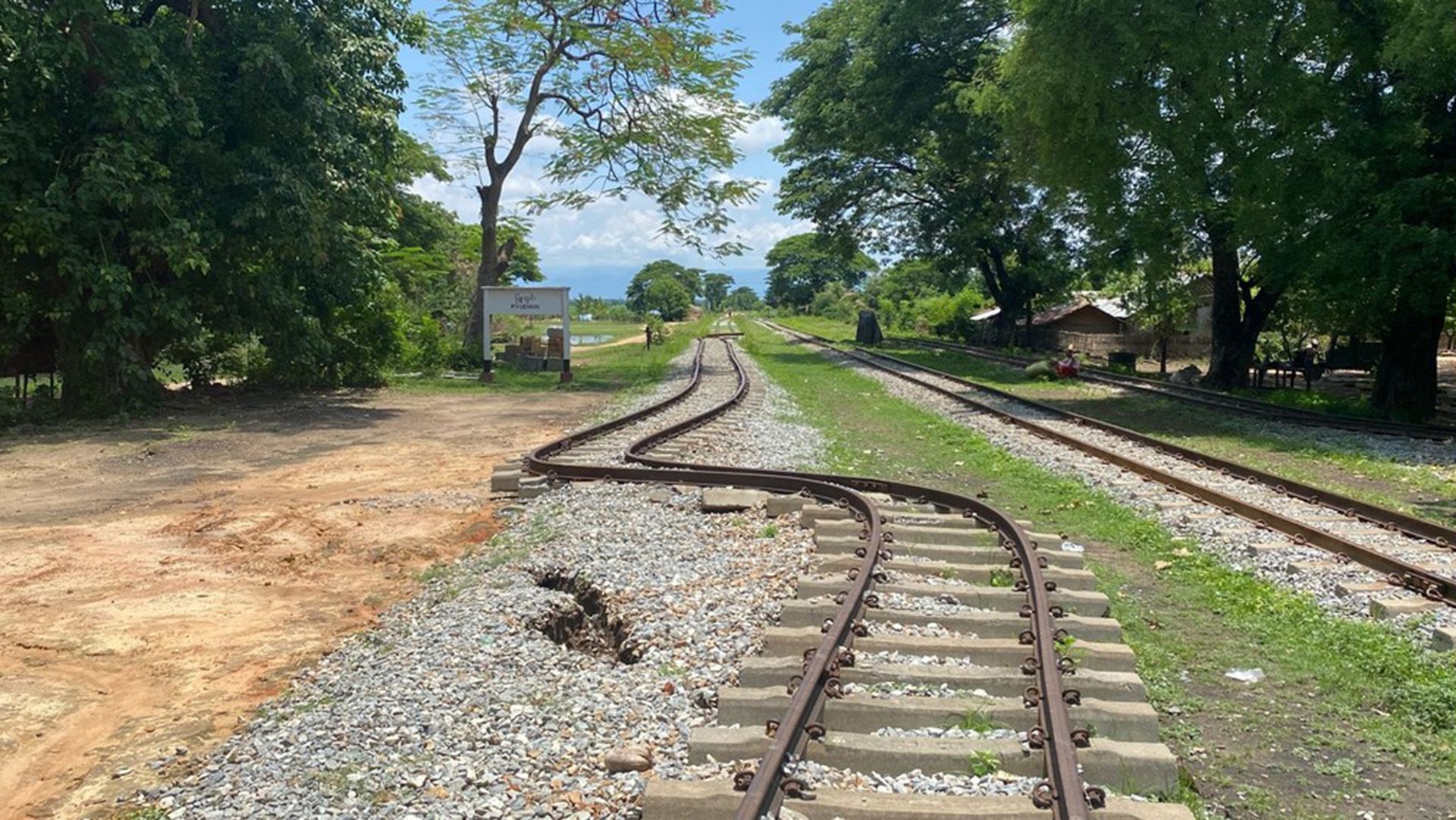
Last year's massive earthquake in Myanmar could help researchers better predict where the worst shaking will be if the "Big One" hits the San Andreas Fault in California. The magnitude 7.7 quake hit on March 28, 2025, near the city of Mandalay and shook buildings as far away as Bangkok, 830 miles (1,330 kilometers) away. The death toll was at least 3,700 people. New research that used detailed satellite data and a one-of-a-kind video of the ground rupturing reveals that the fault had a twisty, almost helical shape, which affected the shaking. The Sagaing Fault in Myanmar that triggered the quake is analogous to many strike-slip faults worldwide that threaten population centers, said Alice-Ag...
Researchers at the U.S. Department of Energy's (DOE) Argonne National Laboratory have completed two of the largest cosmological simulations ever performed. Each simulation modeled the evolution of 13.4 trillion dark matter particles across a region 28.6 billion light-years wide.
Superconductivity has many important practical applications, including creating powerful magnets used in high-resolution medical scans, transporting electricity efficiently and building ultrasensitive measuring devices. Until now, understanding exactly what lay behind this unique phenomenon at high temperatures has eluded scientists over many decades.
Catalysts spur chemical reactions used across industries, from producing fuels and medicines to manufacturing chemicals and treating pollutants. Improving their performance requires understanding where and how reactions happen on their surfaces. However, conventional measurements average the activity of many catalyst particles, concealing local differences that could hold clues to designing more effective materials.
Fishers in the Northeast began noticing an unusual shift in the summer of 2023. Some familiar catches, including shortfin and longfin squid, declined, while cold-water species such as mackerel bounced back from years of decline. A new study published in the Journal of Geophysical Research: Oceans finds that a pulse of cold, fresh water brought unusually cold conditions to the region, disrupting fisheries from New England to the Mid-Atlantic.
Oil and natural gas still account for the vast majority of the world's energy and raw materials, with all the associated environmental and biodiversity consequences. The bioeconomy is an approach to overcoming this dependence: Instead of using fossil fuels, it uses renewable resources such as plants, microorganisms and organic waste. The goal is for economic growth to go hand in hand with protecting species, the climate and soils.
Global rainfall maps are built from observations collected by multiple satellites, but they have an important limitation. The satellites that provide these measurements cannot see the whole Earth at once. As a result, some regions of these maps can have no valid observations.