Over 60% of Connecticut horses exposed to Leptospira bacteria, study finds
Leptospirosis is a neglected zoonotic disease caused by pathogenic Leptospira bacteria and can affect humans and animals, including horses.
Stay informed about scientific discoveries, research developments and new findings from around the world.
Leptospirosis is a neglected zoonotic disease caused by pathogenic Leptospira bacteria and can affect humans and animals, including horses.
Most conventional methods of ultrafast photography use evenly spaced intervals in which images are taken, but new developments have shown how much can be left out of the story, especially when multiple timescales are involved.
A seven-minute virtual reality (VR) intervention can help students feel calmer, less anxious and better able to cope with academic pressure, according to new research from City St George's. The findings, published in Scientific Reports, come at a time when schools and universities across the U.K. seek new approaches to support student well-being amid growing concerns about stress, anxiety and overwhelm among young people.
In most parts of Europe, bees have become less widespread during the last 100 years, according to a new study published in the journal Proceedings of the National Academy of Sciences.
Dr. Rory Loughnane, a reader in early modern studies in the School of Humanities, has confirmed "beyond any reasonable doubt" that William Shakespeare was the principal writer of "Edward III" and that it was written in collaboration with his so-called rival and Canterbury's most famous poet and playwright, Christopher Marlowe.
Plastics are accumulating in ecosystems around the world, and their tiny fragments can collect and carry chemical pollutants and pathogens into plants, animals and people. When fishermen in Cambodia's Mekong River became alarmed about the amounts of plastic they were hauling up with each catch, they reached out to scientists for help.
Announcements over recent months that artificial intelligence models have cracked previously unsolvable problems are shaking top-level mathematicians to the core, and they are now asking themselves: Where do we come in?
Every cell in the human body faces a chronic challenge: protecting its DNA. Whenever cells divide, their genetic material must be copied accurately. But DNA is continuously under attack, and when damage goes unrepaired, it can threaten genome stability and contribute to the progression of disease.
At its best, negotiation is the art of mutual value creation. But once created, that value must be capitalized upon in the post-negotiation environment. That means the formal end of negotiations is often only the end of the beginning. Time will tell whether the gains and losses sustained during a negotiation are as solid as they seem when the counterparties get up from the table.
Today, as part of the official release of California's Fifth Climate Change Assessment, researchers at the University of California, Santa Cruz, have launched a platform, data and tools that community leaders can use to estimate the block-by-block climate risks and the cost-effectiveness of adaptation solutions for reducing coastal damages.
The Orionidsβone of two major meteor showers caused by remnants from Halley's Cometβwill peak this week, though a large moon will dim visibility until after it sets late at night.
The PermitAI team at the Department of Energy's Pacific Northwest National Laboratory has changed how federal agencies search past environmental permitting decisions. Now it is taking that access one step further with two newly released publicly available resources that give instant access to both past decisions and live government data. Together, they cover the full federal permitting life cycle.
Pulsars are rapidly rotating neutron stars, the extremely dense cores left behind when massive stars explode. Astrophysicists have recently observed a pulsar rotating over 300 times per second that appeared to be slowing down unusually quickly.
Light is one of the most powerful tools scientists have for probing matter. By interacting with electrons, light reveals how atoms, molecules and materials are structured and how they evolve in time. Highly energetic ultraviolet and X-ray photons are particularly attractive because they can access electrons located close to atomic nuclei, where each chemical element carries its own distinctive electronic fingerprint.
California's Central Coast is headed toward more climate extremes, with hotter days, stronger storms and more intense droughts.
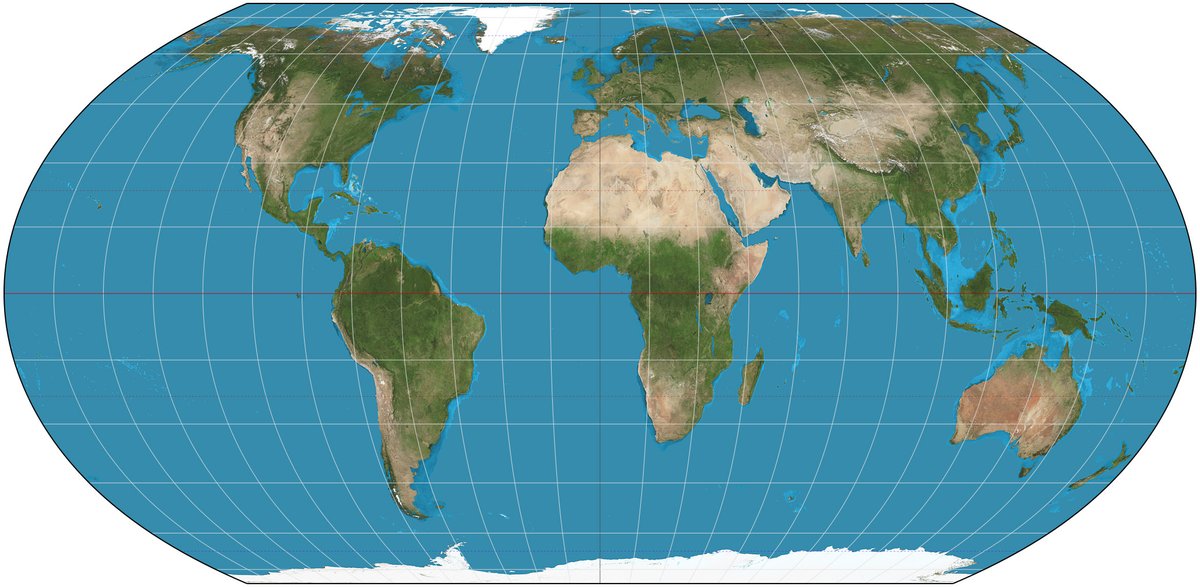
Mapping a sphere onto a flat plane is mathematically impossible. But a better world map than the Mercator projection is
NASA researchers are developing the future of flight on Mars, laying the groundwork for helicopters with the ability to fly higher and farther while conducting science on the Red Planet. Using high-fidelity computer simulations and wind tunnel tests, engineers are reimagining the rotorcraft blades that could carry the next generation of Mars flyers.
A research team led by distinguished professor Giuseppe Pezzotti at the Biomedical Engineering Center, Kansai Medical University (Japan), has demonstrated that differences in the molecular structures of viral RNA can be captured as "Raman barcodes," enabling the identification of 20 SARS-CoV-2 variants and subvariants. These findings are expected to contribute to the development of a rapid method for identifying newly emerging viral variants.
According to a new study, all employees like private rewardsβa salary increase or glowing performance review that's not broadcast to others in the workplaceβbut narcissists also want to have rewards made public for their colleagues to see, the researchers found.
Biochar can store carbon in the soil and reduce the amount of carbon dioxide in the atmosphereβyet we still know too little about how long the biochar will persist. Now, researchers from the Swedish University of Agricultural Sciences have found a new way to measure this, using wood from the 1960s that was affected by nuclear weapons testing. The paper is published in the journal Radiocarbon.
Even before they are old enough to vote, some young people are finding ways to make a difference. Civic engagement among youth ages 15 to 25 can range from volunteering in the community and joining a protest march to signing a petition or expressing political views on social media, according to Portland State University researcher Yue Ni.
Tiny atoms and molecules are constantly bombarding each other all around us. While we regularly measure the large-scale effects of these interactions, measuring the effect of each individual collision is far more difficult. But now, researchers have managed to measure how tiny gas particles affect a single silica particle in the lab. In their new study, published in Physical Review Letters, the team describes how they detected the momentum transfers of individual collisions of gas particles with a nanoparticle levitated in laser light.
Drone-mounted laser technology is helping archaeologists locate Aboriginal rock art sites hidden in the rugged, densely vegetated landscapes of Australia's Blue Mountains, demonstrating a new approach to surveying archaeological sites that can be difficult and expensive to reach on foot.
Marital breakups have consequences that extend beyond the immediate end of cohabitation. Research from the University of Granada has found that these consequences can last for decades, eventually becoming a significant source of vulnerability as people reach old ageβespecially if they live alone and have little contact with their children or insufficient social support. The study, published in the International Journal of Sociology, was conducted by Juan LΓ³pez Doblas, a professor in the Department of Sociology, and MarΓa del Pilar DΓaz Conde, a professor in the Department of Social Psychology.