Latest Science & Research News

Stay informed about scientific discoveries, research developments and new findings from around the world.

Latest News

View All →
The James Webb telescope is watching one of the earliest supernovas in the universe unfold
Science News

The James Webb telescope is watching one of the earliest supernovas in the universe unfold

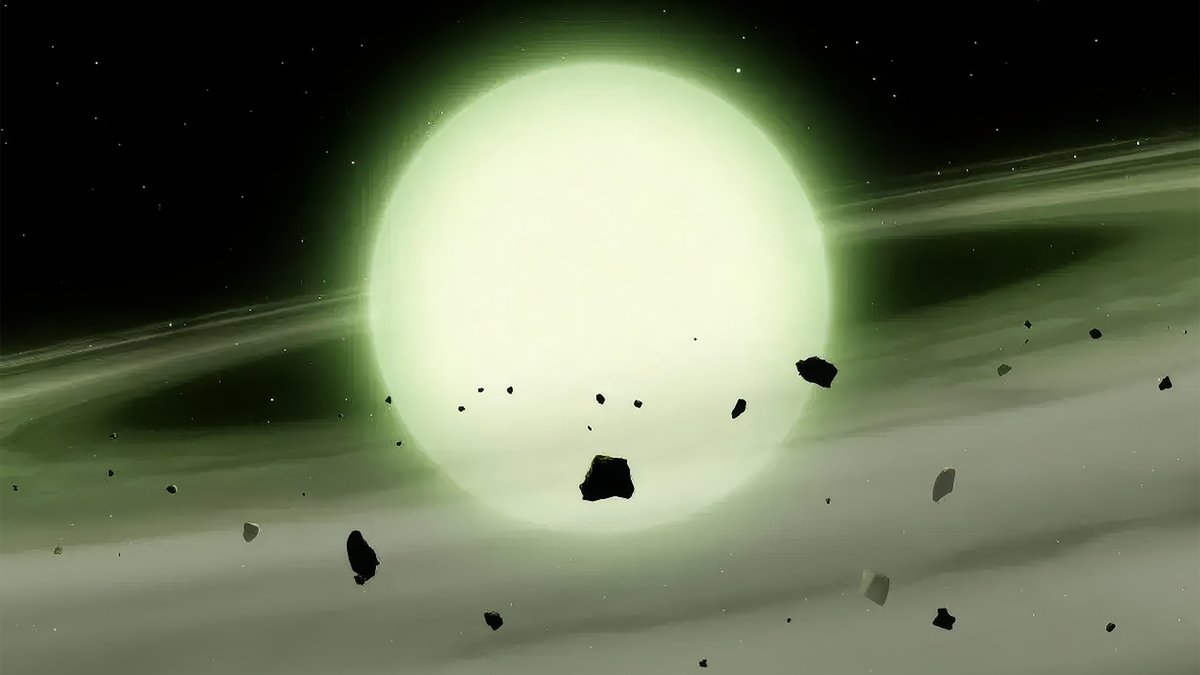
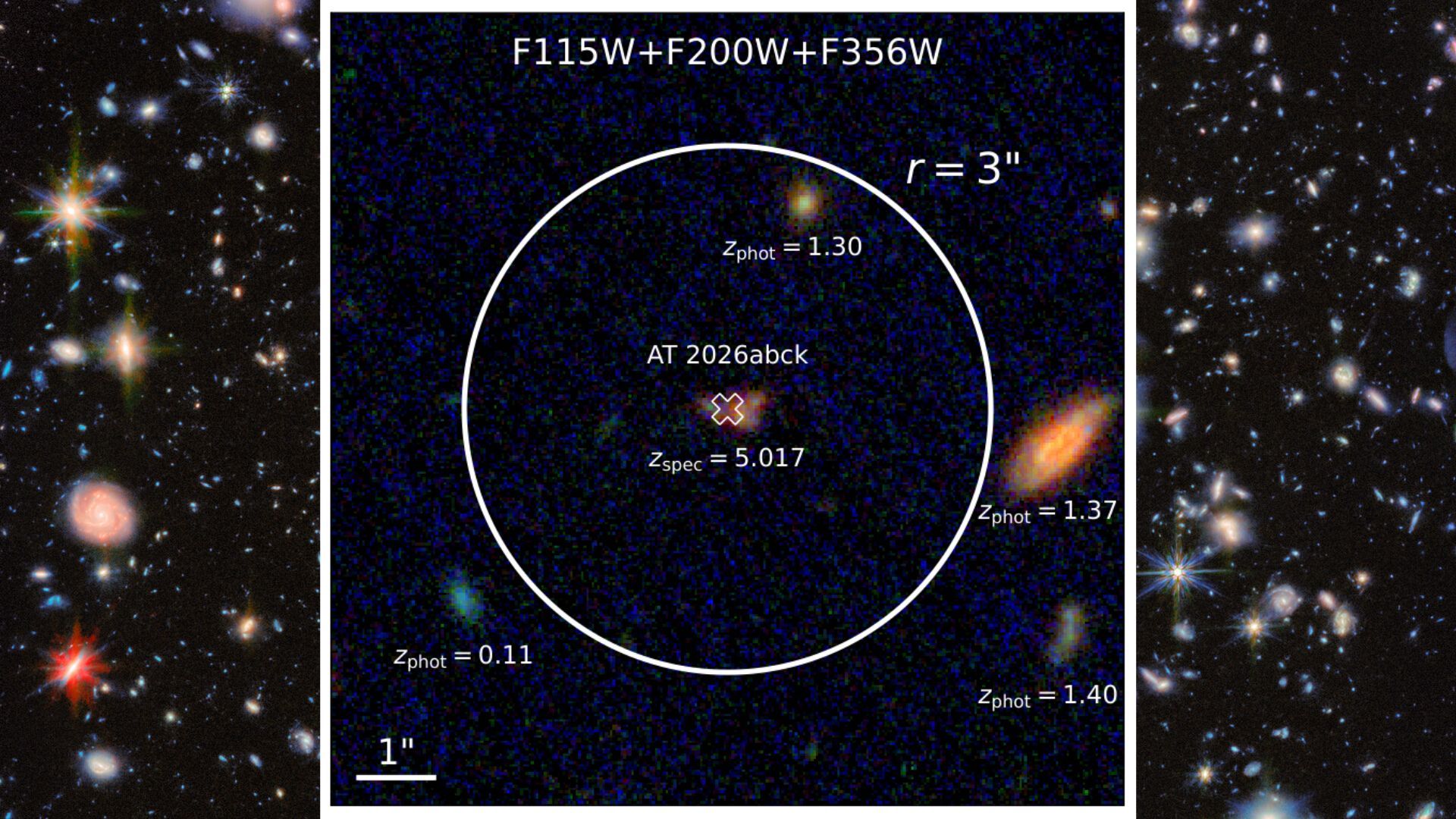
Astronomers using the James Webb Space Telescope (JWST) have found what may be one of the most distant supernovas ever observed. And in a stroke of cosmic luck, the team thinks they're seeing what the explosion looked like just days after it ignited.The supernova, named AT 2026abck, dates to around 1.15 billion years after the Big Bang, when the universe was less than one-tenth of its current age and bursting with massive stars flickering into life. The massive exploding star violently released its light over 12.5 billion years ago, according to the researchers — so long ago that the distance between us has effectively ballooned sixfold due to the expansion of the universe. The discovery was...

📅 2026-10-20 16:45:34    •    Live Science
Read Original Article →
Collecting phones during college lessons raises grades, large randomized trial finds
Science News

Collecting phones during college lessons raises grades, large randomized trial finds

Your phone vibrates, a notification pops up, or you just take a quick glance at the screen. Even minor interruptions can affect your concentration—not least when you're in class. Now, a large randomized trial involving more than 16,000 students in India shows that teaching without access to mobile phones can improve students' academic performance. The researchers also found that students who experience phone-free teaching firsthand become more supportive of the restrictions. The research is published in Science.

📅 2026-10-20 16:00:01    •    Phys.org
Read Original Article →
Quantum probability can't be derived without assuming it first
Science News

Quantum probability can't be derived without assuming it first

For nearly a century, physicists have relied on the Born rule to calculate the chances of different outcomes when they measure a quantum system. Yet despite decades of effort, nobody has managed to derive the rule from more basic mathematical principles without making assumptions about probability along the way.

📅 2026-10-20 15:50:01    •    Phys.org
Read Original Article →
Scientists discover a promising blood sugar–regulating compound in red alga
Science News

Scientists discover a promising blood sugar–regulating compound in red alga

It is a dietary staple found in sushi, rice wraps and ramen toppings. Commonly known as nori in Japan and gim in Korea, red seaweed is especially popular across Asia. Yet, despite its widespread consumption, many of its nutritional benefits remain poorly understood. Now, research led by Hokkaido University scientists has discovered that digestion of a particular red alga releases a peptide, or a small fragment of protein, with potential benefits for blood glucose control and diabetes prevention. The study was published in Food Bioscience.

📅 2026-10-20 15:40:14    •    Phys.org
Read Original Article →
Undeciphered Voynich manuscript may have been bound out of order, study finds
Science News

Undeciphered Voynich manuscript may have been bound out of order, study finds

The mysterious and undeciphered Voynich manuscript has caused consternation among code-breakers, linguists and scholars of medieval literature for more than a century. But now experts think they've worked out why it's so hard to crack: It was bound incorrectly in the 15th century, meaning the pages are out of order. The new linguistic analysis of the document has moved researchers closer to figuring out what the text was all about.The Voynich manuscript is a medieval codex made up of leaves of parchment carbon-dated to the early 15th century. Its 240 pages are covered with about 38,000 words of a unique script called "Voynichese" along with illustrations of people, plants and astrological sy...

📅 2026-10-20 15:34:47    •    Live Science
Read Original Article →
Ancient wildfire study offers warning for a warming world
Science News

Ancient wildfire study offers warning for a warming world

New research from the University of Aberdeen has revealed that periods of global warming can trigger long-lasting increases in wildfire activity, with ecosystems taking far longer to recover than previously thought. The study, recently published in Scientific Reports, provides the first detailed evidence of how wildfires responded to a major natural warming event around 65 million years ago, the Danian hyperthermal. This work offers important insights into the risks facing today's world as climate change drives more frequent and severe fires.

📅 2026-10-20 15:20:10    •    Phys.org
Read Original Article →
A quantum pathway to entropy-free energy transfer
Science News

A quantum pathway to entropy-free energy transfer

For scientists, breakthroughs often stem from unexpected turns. A research team led by Oscar Dahlsten, an associate professor in the Department of Physics at City University of Hong Kong (CityUHK), set out to prove a theoretical limitation, only to discover a quantum solution. The finding breaks traditional physical constraints and introduces a strategy for harvesting energy from fluctuating sources.

📅 2026-10-20 15:00:01    •    Phys.org
Read Original Article →
Locusts get a sensory assist from nanomaterials—helping them detect more chemicals
Science News

Locusts get a sensory assist from nanomaterials—helping them detect more chemicals

Scientists have long explored the idea of using insects as our agents in the field in places where humans won't fit or survive. Imagine a cockroach in an earthquake zone, able to skitter into the rubble to map out exactly where human chemical signatures can be found, or a grasshopper leaping through a minefield to bring back a map of the bombs based on the vapors it encountered.

📅 2026-10-20 14:40:07    •    Phys.org
Read Original Article →
Peat bogs, the natural archives of mining fallout, reveal ancient Europe's hidden metal networks
Science News

Peat bogs, the natural archives of mining fallout, reveal ancient Europe's hidden metal networks

For thousands of years, humans shaped their world with stone, wood and bone. Metallurgy, the art and science of working with metals such as copper, bronze and iron, marked a turning point in human history. The mining that fueled metalworking also shaped Europe's and the Mediterranean's economies and politics over centuries.

📅 2026-10-20 14:20:12    •    Phys.org
Read Original Article →
Page 16of 171   •   4,090articles