Latest Science & Research News

Stay informed about scientific discoveries, research developments and new findings from around the world.

Latest News

View All →
Unmowed strips attract insects, but many abandon partially mowed dikes
Science News

Unmowed strips attract insects, but many abandon partially mowed dikes

Municipalities are increasingly mowing dikes and verges in stages, so that insects can make longer use of the plants growing there. Mowing is essential to keep a dike strong, explains ecologist Constant Swinkels of Radboud University. "If you don't mow, trees or sturdy shrubs such as blackberries may start to grow. You don't want that, because their roots are so thick that they can cause dikes to collapse."

📅 2026-10-05 20:00:06    •    Phys.org
Read Original Article →
A novel path to fusion ignition: Heat first, then add fuel
Science News

A novel path to fusion ignition: Heat first, then add fuel

For more than 70 years, fusion energy researchers have used a particular equation to judge whether a plasma would stay hot and dense enough—for long enough—to reach a point where it could sustain itself without any more external power added. While that equation marks the finish line, also known as ignition, it says nothing about the best way to reach it. New research from the U.S. Department of Energy's (DOE) Princeton Plasma Physics Laboratory (PPPL) maps a path to ignition conditions using far less energy than any other path.

📅 2026-10-05 19:40:13    •    Phys.org
Read Original Article →
Local tipping points in dune landscapes: How does a dune system organize itself?
Science News

Local tipping points in dune landscapes: How does a dune system organize itself?

Building with nature is an important concept in our coastal defense. After all, by harnessing natural processes, we are more resilient to sea level rise. A good understanding of these processes is therefore indispensable. Ecologist Paul Berghuis, affiliated with Utrecht University and the Royal Netherlands Institute for Sea Research (NIOZ), delved into the world of dune formation and discovered that within young dune landscapes, dunes and grasses do not arrange themselves randomly but follow a fixed pattern.

📅 2026-10-05 19:00:20    •    Phys.org
Read Original Article →
New saber-toothed predator from Argentina suggests its lineage survived longer than believed
Science News

New saber-toothed predator from Argentina suggests its lineage survived longer than believed

In 2014, members of a local museum found fragments of an ancient fossil dating to the end of the Pliocene or early Pleistocene epoch in a seaside cliff on the Argentine pampas. They belonged to a large predator, but the only group they fit, saber-toothed marsupial relatives, had supposedly gone extinct earlier, leaving the identity of the fossil a mystery. That was until Eric del Campo, a paleontologist at the Argentine Museum of Natural Sciences in Buenos Aires and lead author of the study, and his colleagues took a closer look.

📅 2026-10-05 18:40:10    •    Phys.org
Read Original Article →
How changing recipients of golden roses reflect centuries of evolving papal influence
Science News

How changing recipients of golden roses reflect centuries of evolving papal influence

Almost every ceremonial object or ornament of the medieval papal monarchy has disappeared or lost its original purpose. Yet one survives: the golden rose. On Sept. 26, 2026, during Pope Leo XIV's visit to France, he traveled to Lourdes, home to one of the world's most famous shrines to the Virgin Mary. After praying, Leo presented a golden rose to Our Lady of Lourdes—the fifth time he has dedicated a rose to a Marian shrine or image.

📅 2026-10-05 18:40:01    •    Phys.org
Read Original Article →
Tracking uncovers $80 million spent on AI political ads, most without disclosure
Science News

Tracking uncovers $80 million spent on AI political ads, most without disclosure

The 2026 U.S. midterm campaigns are the first in which AI-generated political ads are regularly appearing on people's televisions and social media feeds. We are researchers who have been studying political advertising through the Wesleyan Media Project since 2010. This election cycle—using data from media reports, student coders and AdImpact, a firm that tracks political ad spending—we've tracked about $80 million in spending on almost 170 unique ads that use AI.

📅 2026-10-05 18:20:11    •    Phys.org
Read Original Article →
Whether it's banning books or preventing artists from touring, silencing often backfires
Science News

Whether it's banning books or preventing artists from touring, silencing often backfires

If the goal was to silence rapper Macklemore by preventing him from touring with singer Ed Sheeran, it clearly backfired. Macklemore delivered a monolog in support of Palestinians in Gaza and the West Bank and performed his pro-Palestinian protest song "Hind's Hall" during a Sept. 4, 2026, concert at MetLife Stadium in East Rutherford, New Jersey, where he was an opening act for Sheeran.

📅 2026-10-05 18:00:10    •    Phys.org
Read Original Article →
Why Great Plains rivers depend on wetlands as well as climate
Science News

Why Great Plains rivers depend on wetlands as well as climate

When a prairie river carries more water in one year than another, the obvious place to look for an explanation is the sky. A year with more snow and rain should have more water in rivers. That was also how I initially thought about year-to-year changes in river flow. But while studying the Prairie Pothole Region, I learned that this is only part of the story. What happens after water reaches the ground can be just as important as how much falls from the sky.

📅 2026-10-05 18:00:01    •    Phys.org
Read Original Article →
Pollen study reveals the hidden history of grasses
Science News

Pollen study reveals the hidden history of grasses

Scientists used machine learning and super-resolution microscopy to overcome a challenge that has stymied research into the natural history of grasses for decades. Their method allowed them to detect subtle differences among grass pollen grains and trace changes in grass diversity and the proportions of the two main photosynthetic types of grasses at one site over a period of 25,000 years.

📅 2026-10-05 17:40:16    •    Phys.org
Read Original Article →
Waste plastic yields carbon quantum dots with emissions tunable from UV to yellow-green
Science News

Waste plastic yields carbon quantum dots with emissions tunable from UV to yellow-green

Carbon quantum dots (CQDs) are fluorescent carbon nanomaterials with potential applications in sensing, optoelectronics, displays, anticounterfeiting and environmental technologies. Their optical properties can be adjusted by modifying the carbon structure and surface chemistry, particularly through defect states and the incorporation of heteroatoms. However, achieving predictable and continuous tuning of photoluminescence from a single carbon precursor remains difficult.

📅 2026-10-05 17:20:12    •    Phys.org
Read Original Article →
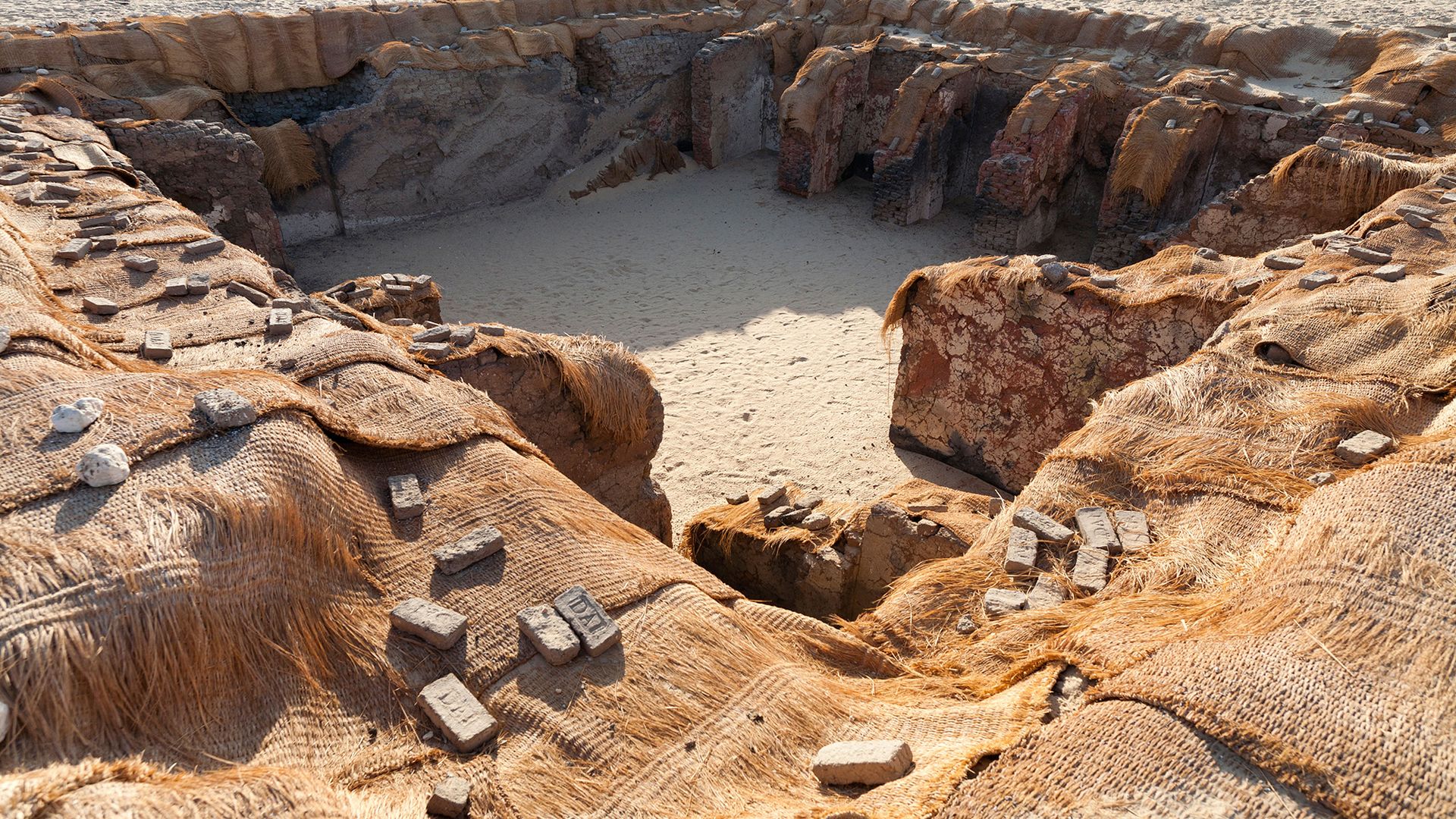
Ancient Egyptians sacrificed pharaohs' servants so they could continue to serve their king in the afterlife, new study finds
Science News

Ancient Egyptians sacrificed pharaohs' servants so they could continue to serve their king in the afterlife, new study finds

The ancient Egyptians practiced human sacrifice around 5,000 years ago, a period shortly after the country was first unified, a new study finds. In the new study, Roselyn Campbell, an anthropology researcher at Purdue University, re-examined 46 skulls from individuals who were buried near royal tombs that belonged to King Djer, King Djet and Meretneith (a woman who likely ruled Egypt at times), and were built near the ancient sacred city of Abydos. All three rulers lived during the first dynasty, a period that started around 5,000 years ago when Upper Egypt and Lower Egypt were unified into one kingdom. The sacrificed retainers were buried next to the tomb of the king they had served.Researc...

📅 2026-10-05 16:40:38    •    Live Science
Read Original Article →
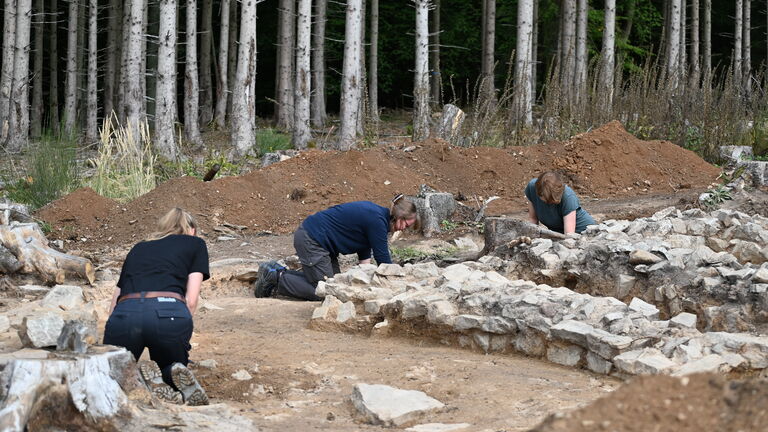
1,800-year-old temple to Mars and statue of Victory unearthed at Roman military fort in Germany
Science News

1,800-year-old temple to Mars and statue of Victory unearthed at Roman military fort in Germany

Archaeologists have discovered a temple dedicated to the Roman war god Mars in the wooded foothills of the Taunus mountains in Germany. The temple was part of a military settlement that was built in the third century to defend the border of the Roman Empire against Germanic tribes.The Roman military constructed thousands of forts across Europe, northern Africa and western Asia while expanding the empire, and most of these fortifications had an adjacent settlement, called a "vicus," that was occupied primarily by merchants, families and other civilians. Since 2024, archaeologists have been excavating the Kapersburg Roman fort and its adjacent vicus in Hesse, roughly 16 miles (26 kilometers) n...

📅 2026-10-05 15:37:20    •    Live Science
Read Original Article →
Page 63of 174   •   4,166articles