Nations seek reset at UN talks as nature goals off track
Nearly 200 nations are gathering in Armenia on Monday for critical negotiations as governments come under pressure to salvage a landmark nature pact whose goals are slipping out of reach.
Stay informed about scientific discoveries, research developments and new findings from around the world.
Nearly 200 nations are gathering in Armenia on Monday for critical negotiations as governments come under pressure to salvage a landmark nature pact whose goals are slipping out of reach.
A bumblebee-like insect that was last seen in France 150 years ago was spotted again in the Paris region in 2025.
Scientists have uncovered an unexpected culprit behind sleep loss in Alzheimerβs disease: overactive immune cells in the brain. By temporarily removing these cells, researchers restored more than two hours of sleep per day in mice, revealing a promising new target for treatment.
A new study led by researchers at ETH Zurich (Switzerland) and the Vrije Universiteit Brussel (Belgium) reveals that glaciers worldwide could lose ice faster than previously projected. Published in Nature Communications, the research shows that accounting for daily weather variability leads to more realistic simulations of glacier melt and results in greater projected ice loss by the end of the century. The findings highlight the importance of short-lived weather events, such as the exceptional heat waves and extreme melt seasons recently observed in several glacierized regions around the globe.
Rising temperatures around the globe are contributing to a range of health risks, from infectious disease to food insecurity and wildfire smoke. Extreme heat is another major public health concern, as climate change drives up both average temperatures and the frequency of extremely hot days. This August was the world's hottest on record, and it drove upticks in heat-related emergency visits and deaths in various U.S. states.Hotter weather is expected to pose dangerous health risks for millions, and pregnant people are especially vulnerable to its impacts, experts caution."Pregnant people are physiologically more vulnerable to heat," Dr. Susanna Esposito, a pediatrician at the University of P...
Juan Mayorga smiled as a stingray glided across his computer screen, moving gracefully over the seabed near Portugal's Desertas Islands, part of the Madeira archipelago in the Atlantic Ocean.
Britain's Met Office says this year's El NiΓ±o is "unprecedented." Japan's weather agency has called it the strongest ever observed. U.S. forecasters say it still trails the biggest events in its record books.
Ken Schreiber was 9 when Neil Armstrong took his first steps on the moon in 1969βa moment he would never forget. Like Armstrong, he became a military fighter pilot.
Welcoming a new baby brings moments of joy, major milestones and significant expenses. And four in five parents say it costs too much to have a baby, according to the University of Michigan Health C.S. Mott Children's Hospital National Poll on Children's Health.
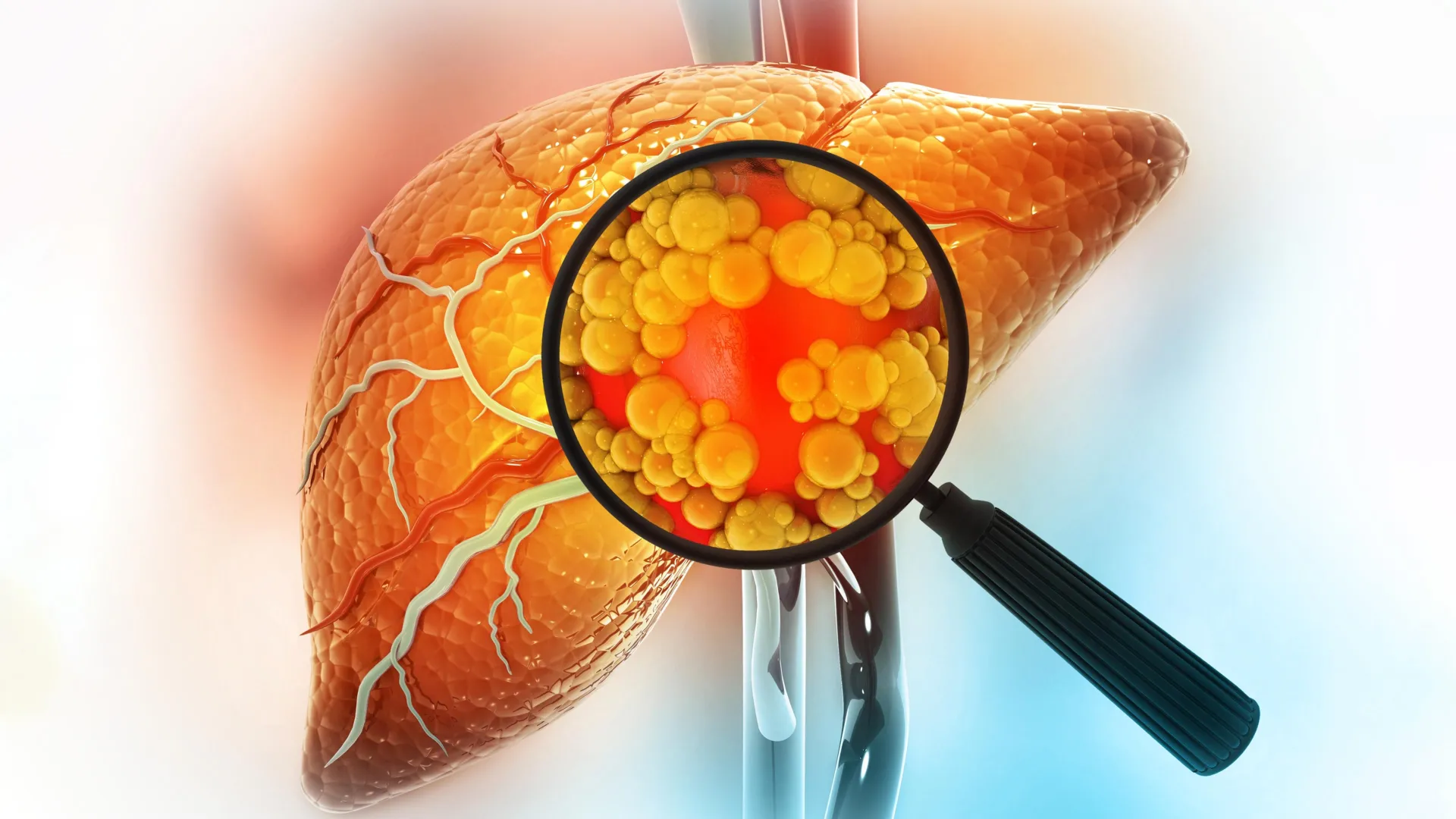
A common liver disease affecting nearly 30% of adults worldwide may be far more complicated than scientists previously realized. Mayo Clinic researchers have discovered that fatty liver disease actually consists of five distinct biological subtypes, each carrying different risks for liver failure, cancer, heart disease, and other serious complications.
Researchers have identified striking parallels between Sigmund Freudβs century-old theories and modern neuroscience, suggesting that the brainβs constant predictions shape how we experience reality. The findings could help explain why harmful thought patterns are so difficult to break and offer new insights into treating mental disorders.
Imagine a company that sells you equipment, invests money in your business and then rents back what you build with it. It's your supplier, your investor and your customer all at once.
Archaeologists have discovered a faience workshop at a major temple complex in the ancient Nubian capital of Napata, showing how the rulers of ancient Kush used specialized craft production to reinforce royal power.
Some 23,000 years ago, during the coldest part of the last ice age, people walked across the muddy margins of an ancient lake in what is now White Sands National Park, New Mexico.
Today, our planet is teeming with life, but it has not always looked the same. Long before forests reached skyward, animals walked on land and dinosaurs rose and fell, our planet was shaped by a much smaller, more unassuming form of life. And we can still find traces of it today.
Japanese scientists are readying a mission to Mars' moons to retrieve samples that could help unlock the origins of the solar system and life on Earth, in what aims to be the first round trip to the Martian region.
DNA is not randomly distributed within the nucleus but is packaged with proteins into chromatin, which is precisely folded into complex three-dimensional structures. However, scientists have not fully understood how this complex three-dimensional (3D) organization is regulated or how it changes over time.
Dozens of critically endangered orangutans have been rescued in recent weeks from rampant wildfires burning across Indonesia that have cloaked the region in toxic haze, conservation groups said.
Depending on the cultivar, higher concentrations of carbon dioxide (COβ) in the atmosphere can significantly alter the protein composition of wheat. This affects not only baking quality but potentially also the tolerability of wheat products. This is the conclusion of a new study led by the Leibniz Institute for Food Systems Biology at the Technical University of Munich. According to the study, the adaptation of crops to climate change should in the future focus not only on high yields but also on quality characteristics such as protein composition. The research is published in the journal Food Chemistry.
Some quantum systems are so complex that even the most powerful supercomputers struggle to simulate their behavior. One solution is quantum simulation: building a controllable quantum system in the lab and tuning it to mimic the one researchers want to understand.
In optical fibers, chips and other light-guiding devices, minor defects can scatter photons and disrupt their path. A new study demonstrates a way to reveal properties which, in certain systems, help light wave behavior withstand such flaws. The method could help speed up the search for new kinds of electronics and optical technologies, and contribute to more reliable quantum devices.
Whether we are waiting for a car windshield to defrost in winter or a warm drink to cool down, how long it takes for an object to settle into a stable, even temperature within its environment (thermal equilibrium) depends on numerous factors. These can include surface area, the material properties of an object and airflow.
Graduate students in Penn State's College of Agricultural Sciences contributed to the first complete genome sequence of a harmful plant pathogen from an ornamental Prunus host through an active-learning activity in a plant disease diagnosis course.
For the first time, scientists have observed bleached corals on the brink of death fully recover through brief contact with healthy clones. Ghostly white corals returned to full health in a laboratory setting within seven weeks, the fastest documented recovery to date, according to a study published in Science Advances.