Latest Scientific Discoveries

All News →
Brain scans reveal 'number line' that's used to mentally compare values
Science News

Brain scans reveal 'number line' that's used to mentally compare values

Picture a number line, with the values running from the smallest to the largest. New research shows that the human brain uses a similar system when comparing numbers; in the study, scientists uncovered a "mental map" in which numbers have unique coordinates in the brain, which may help us place them in order of magnitude."Numbers are abstract concepts, but our brains have ways of organizing them that allow us to compare and reason about their values," said study co-authors Daniela Valério, a postdoctoral researcher in the INSERM-CEA Cognitive Neuroimaging Unit (UNICOG) in France, and Stanislas Dehaene, the director of UNICOG. "What is fascinating is that the brain can bring together numbers ...

📅 2026-10-22 18:00:00    •    Live Science

Watch bizarre snake 'cartwheel' away from danger at more than 12 feet per second
Science News

Watch bizarre snake 'cartwheel' away from danger at more than 12 feet per second

Cryptic snakes in Southeast Asia have evolved a remarkable trick for evading predators: Instead of slithering, they arch their long bodies and tumble away at high speeds. The dwarf reed snakes (Pseudorabdion) pull off this acrobatic feat by keeping their head in a relatively fixed position while rotating the rest of their body, according to a new study published Monday (Oct. 19) in the journal Current Biology. Researchers filmed the snakes from different angles to better understand the mechanics of the rolling, or cartwheeling, behavior. They found that the snakes were capable of reaching velocities of up to 12.1 feet per second (3.69 meters per second), which is much faster than they can sl...

📅 2026-10-22 17:25:38    •    Live Science
Japan launches world's first round-trip mission to Mars
Science News

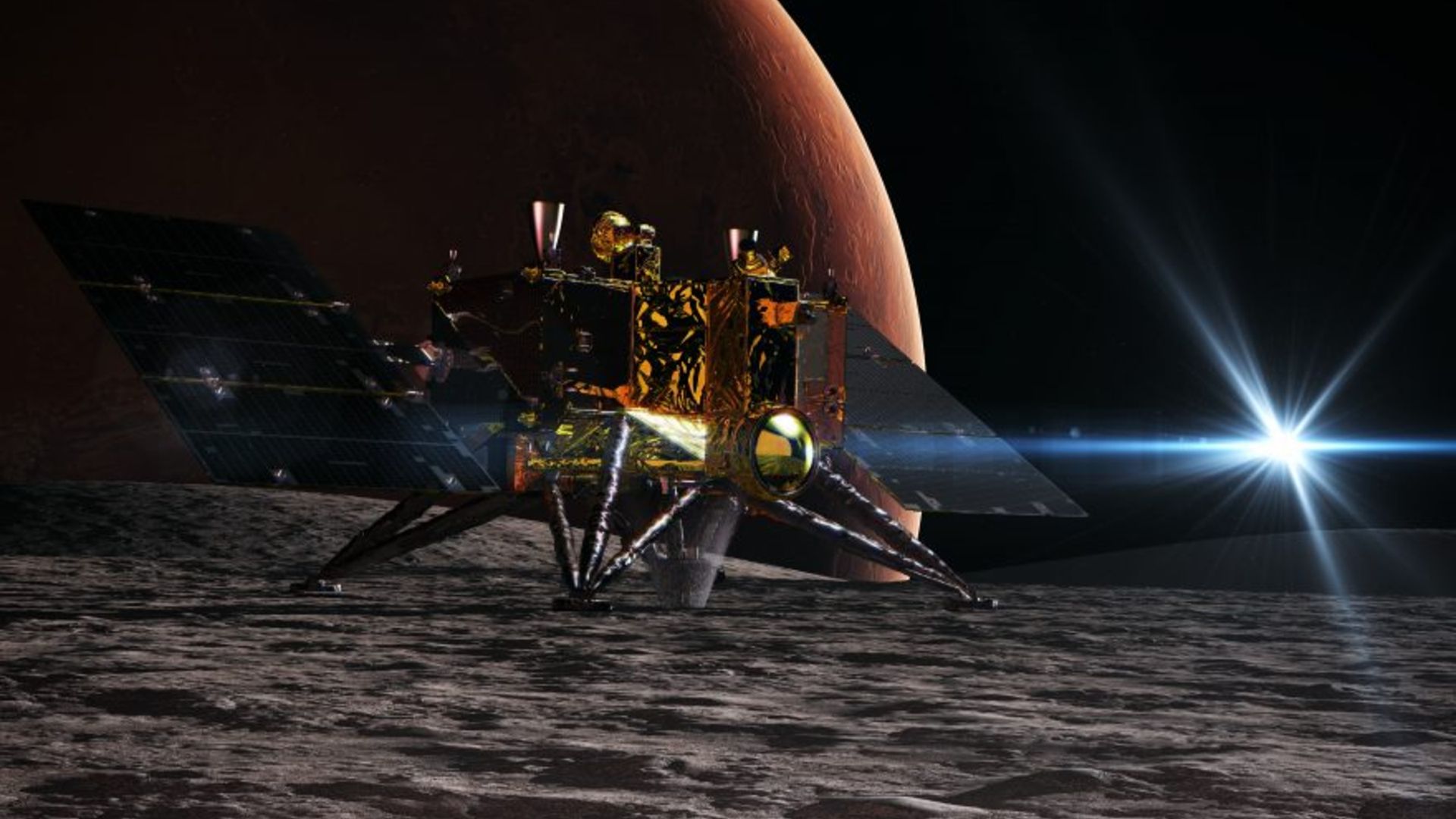
Japan launches world's first round-trip mission to Mars

On Monday (Oct. 19), Japan's space agency launched a first-of-its-kind sample-return mission to Mars. The historic endeavor marks another major step toward humanity's shared goal of understanding — and perhaps eventually colonizing — one of our closest planetary neighbors, experts say. The Japan Aerospace Exploration Agency's (JAXA) Martian Moons Exploration (MMX) probe is an international effort, constructed with help from NASA, the European Space Agency (ESA) and others. Over the next few years, it will closely study the Red Planet's twin moons, Phobos and Deimos. The spacecraft will snap close-up photos of the pair before attempting to land on the larger satellite, Phobos, to scoop up roc...

📅 2026-10-22 16:46:36    •    Live Science
Will plants survive climate change? The 'Great Dying' reveals clues about their resilience.
Science News

Will plants survive climate change? The 'Great Dying' reveals clues about their resilience.

About 251 million years ago, volcanic eruptions wiped out most life on Earth. For about a million years, the Siberian Traps in Russia spewed huge clouds of carbon dioxide into the atmosphere, leading to the most severe extinction event in our planet's history.Equatorial temperatures spiked, making much of the land too hot for life. Meanwhile, the oceans became acidic and most of the creatures in them suffocated from lack of oxygen. Known as the Permian-Triassic mass extinction or the "Great Dying," it ultimately destroyed more than 90% of ocean life and 70% of terrestrial species.However, in a corner of what is now China, a refuge of pollen-producing plants avoided that fate and created an o...

📅 2026-10-22 16:00:00    •    Live Science
All tropical coral reefs could collapse within 50 years
Science News

All tropical coral reefs could collapse within 50 years

Shallow-water coral reefs are at high risk of disappearing by 2075, the IUCN has warned at a UN biodiversity conference. The loss would decimate fisheries and speed up coastal erosion

📅 2026-10-22 13:20:00    •    New Scientist