Latest Science & Research News

Stay informed about scientific discoveries, research developments and new findings from around the world.

Latest News

View All →
Gene editing produces soybean with more than 90% oleic acid
Science News

Gene editing produces soybean with more than 90% oleic acid

Sejong University researchers have developed a high-quality soybean with improved oxidative stability, reduced saturated fat and increased seed fatty acid content. The research team led by Hyun Uk Kim, a professor in the Department of Bio-Industrial Resources Engineering at Sejong University, created the soybean line containing up to 90.2% oleic acid using CRISPR/Cas9 gene-editing technology. The study is published in the Plant Biotechnology Journal.

📅 2026-09-23 22:20:05    •    Phys.org
Read Original Article →
Banking patterns could help identify people experiencing financial abuse, UK study finds
Science News

Banking patterns could help identify people experiencing financial abuse, UK study finds

Telltale signs of financial abuse, such as depleted savings, increasing debts and declining credit scores, can be identified in bank records, according to an analysis of U.K. banking data published in Nature. The findings reveal up to 373 indicators of financial behavior that could help pinpoint customers who may be experiencing economic abuse.

📅 2026-09-23 22:00:02    •    Phys.org
Read Original Article →
The Antarctic's only two flowering plants reveal opposing strategies for surviving long-term warming
Science News

The Antarctic's only two flowering plants reveal opposing strategies for surviving long-term warming

A team of Chilean and Spanish researchers has published the results of one of the longest-running in-situ warming experiments in maritime Antarctica in the journal Physiologia Plantarum. The experiment exposed the Antarctic continent's only two native vascular plant species, Deschampsia antarctica (Antarctic hairgrass) and Colobanthus quitensis (Antarctic pearlwort), to passive warming chambers (Open Top Chambers, OTCs) for seven years.

📅 2026-09-23 21:20:08    •    Phys.org
Read Original Article →
Graphene measurements reveal energy-loss and quantum-coherence exponents diverge under gate control
Science News

Graphene measurements reveal energy-loss and quantum-coherence exponents diverge under gate control

Scientists have shown that the two exponents (inelastic scattering exponent and dephasing exponent) commonly used to describe electron scattering in graphene do not necessarily follow the same behavior. Using gated epitaxial graphene, a multi-institutional team of researchers independently extracted the two exponents through current-heating measurements and weak-localization analysis. The contrasting gate-voltage dependence provides evidence that energy relaxation and loss of quantum phase coherence can be governed by different microscopic processes.

📅 2026-09-23 21:20:04    •    Phys.org
Read Original Article →
Evolved enzymes build tuberculosis antibiotic ingredient in the desired form, potentially reducing waste
Science News

Evolved enzymes build tuberculosis antibiotic ingredient in the desired form, potentially reducing waste

Tuberculosis, or TB, is a contagious bacterial infection that primarily affects the lungs. While curative treatments exist, more than 80% of cases occur in low- and middle-income nations, where drug-resistant strains are on the rise and the cost of medications is a burden. A new class of antibiotics has shown promise against multidrug- and extensively drug-resistant TB, but its manufacturing cost is a barrier to access in poorer countries that need the treatments most.

📅 2026-09-23 21:00:05    •    Phys.org
Read Original Article →
‘Lately, my algorithm is trash’
Research Institutions

‘Lately, my algorithm is trash’

Illustration by Andy Huang/Ikon Images Science & Tech ‘Lately, my algorithm is trash’ Are we shaping our feeds or are they shaping us? Liz Mineo Harvard Staff Writer September 23, 2026 long read Recommendation algorithms promise social media users a personalized experience, but some experts worry they promote doomscrolling, brain rot, and myriad mental health problems. Australia recently proposed legislation to allow users to opt out of algorithms with the goal of protecting children online and giving people more control over what they see on their feeds. We asked faculty members from different fields of study to share their views and concerns about recommendation algorithms. Their responses...

📅 2026-09-23 20:55:44    •    Harvard Gazette
Read Original Article →
New AI methodology powers the latest million dollar list
Science News

New AI methodology powers the latest million dollar list

New research from Indiana University Lilly Family School of Philanthropy examines charitable gifts of $1 million or more from 2021 to 2023. The Million-Dollar-Plus Giving in the United States, 2021–2023 report offers insights into how these donors responded to a rapidly changing environment.

📅 2026-09-23 20:40:05    •    Phys.org
Read Original Article →
Curios and curiouser
Research Institutions

Curios and curiouser

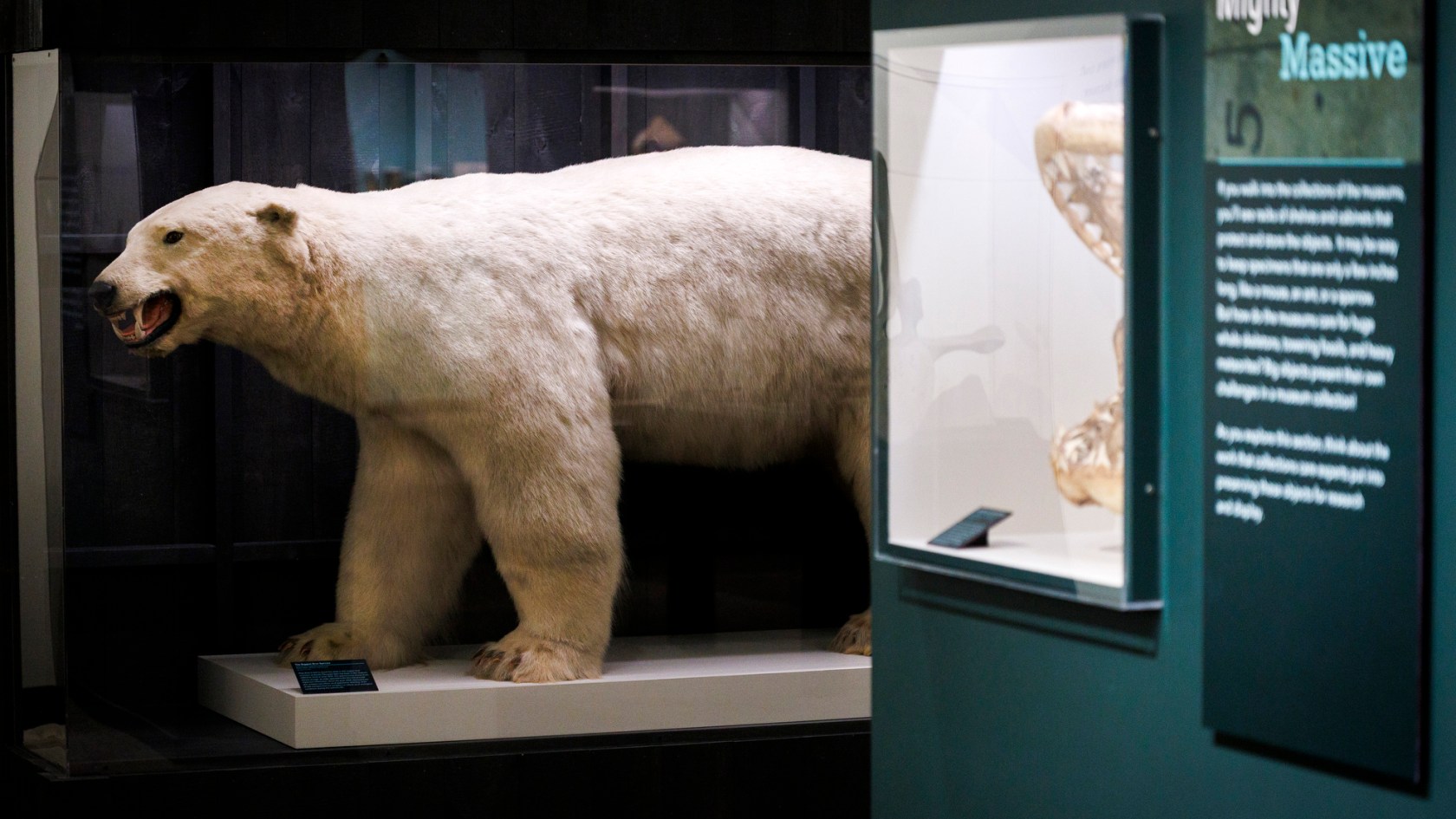
Science & Tech Curios and curiouser Polar bear from 1878. Stephanie Mitchell/Harvard Staff Photographer Anna Lamb Harvard Staff Writer September 23, 2026 5 min read With exhibits including a dodo, fish mummified in pearl, and a ‘King Kong’-connected Komodo, ‘discovering the stories is one of the best jobs’ You’ve probably already marveled at the astonishingly realistic glass flowers on display at the Harvard Museum of Natural History as well as the whale skeletons suspended from the rafters in its Great Mammal Hall. But have you seen its dodo bird specimen or the Komodo dragon skull? Both are showcased in the new exhibit “Collecting Wonders: Tomorrow’s Discoveries,” which has unearthed some ...

📅 2026-09-23 19:23:00    •    Harvard Gazette
Read Original Article →

How did Hurricane Polo get so powerful?
Science News

How did Hurricane Polo get so powerful?

A Pacific cyclone dubbed Polo exploded from a tropical storm into a powerful Category 5 hurricane in less than 24 hours on Tuesday (Sept. 22), with winds reaching speeds of 180 mph (290 km/h). Now drifting off the southwest coast of Mexico, Polo has been downgraded to a Category 4 storm but remains "a very powerful major hurricane," the National Hurricane Center (NHC) said in an update Wednesday (Sept. 23).As Polo moves northwest, it is expected to drive torrential rainfall on parts of Mexico's southwest coast. Although the storm is not predicted to make direct landfall, the NHC has warned that heavy rain may produce life-threatening flooding and mudslides, as well as extremely hazardous oce...

📅 2026-09-23 18:46:21    •    Live Science
Read Original Article →
The healing power of gene therapy
Research Institutions

The healing power of gene therapy

Health ‘Harvard Thinking’: The healing power of gene therapy Illustrations by Liz Zonarich/Harvard Staff Samantha Laine Perfas Harvard Staff Writer September 23, 2026 long read How researchers are seeing their work changing lives — from restoring children’s hearing to saving a baby born with a fatal disease Baby KJ made national headlines last year when at 6 months old he became the first person to receive a personalized CRISPR gene-editing treatment for his previously incurable genetic disorder. David Liu, the Thomas Dudley Cabot Professor of the Natural Sciences, says that the case — spearheaded by doctors at the University of Pennsylvania and at the Children’s Hospital of Philadelphia — h...

📅 2026-09-23 17:51:53    •    Harvard Gazette
Read Original Article →
This week’s new questions
Science News

This week’s new questions

Is it faster to jog up stairs or take them two at a time? If the world we observe is just our brain’s interpretation of the electro-chemical signals it receives from our eyes, what is the world actually like?

📅 2026-09-23 17:00:00    •    New Scientist
Read Original Article →
Researcher finds that cats lie around for a ridiculous amount of time
Science News

Researcher finds that cats lie around for a ridiculous amount of time

Josie Ford Feedback is our weekly column of bizarre stories, implausible advertising claims, confusing instructions and more A little catty Feedback’s felines are often nowhere to be seen. For hours at a time – in the case of the more free-range cat, sometimes several days – they vanish from sight. What might they be doing? Torturing the local small-animal population perhaps, or chasing fallen leaves around the yard, or visiting the local school to cause as much disruption to learning as possible, or perhaps just lazing in a warm spot to sleep. But who knows? One person who does know is Michelle Smit at Massey University in New Zealand, because she and her colleagues put collar-mounted accel...

📅 2026-09-23 17:00:00    •    New Scientist
Read Original Article →
Page 95of 174   •   4,174articles