Latest Science & Research News

Stay informed about scientific discoveries, research developments and new findings from around the world.

Latest News

View All β†’
Devastating year for Switzerland's glaciers after extreme heat and low snow
Science News

Devastating year for Switzerland's glaciers after extreme heat and low snow

Switzerland's glaciers lost more than 5% of their ice volume in 2026. Although melt rates did not quite reach the record levels of 2022, glacier thickness decreased by an average of 2.5 to 4 meters (8 to 13 feet) this year, and some glacier tongues lost up to 10 meters (33 feet) of ice. The research is published in the journal GLAMOSβ€”Glacier Monitoring Switzerland.

πŸ“… 2026-09-30 23:00:01    β€’    Phys.org
Read Original Article β†’
Peruvian mummies raise questions about Wari conquest of Nasca civilization
Science News

Peruvian mummies raise questions about Wari conquest of Nasca civilization

For centuries, historians have drawn the boundaries of where ancient people lived based on the evidence they left behind. By studying their remains, burial practices and other archaeological clues, they can determine the types of relationships they had with other people in the area. However, this can all change when new archaeological evidence is found.

πŸ“… 2026-09-30 22:20:16    β€’    Phys.org
Read Original Article β†’
Fluorescent sensors could help researchers see diabetes in action
Science News

Fluorescent sensors could help researchers see diabetes in action

Researchers from the University of Bath have developed fluorescent molecular probes that can detect changes in glucose levels inside living animals, giving scientists new ways of visualizing sugar uptake and studying diabetes, cancer and other metabolic diseases in whole organisms in real time. The findings are published in the journal Advanced Science.

πŸ“… 2026-09-30 22:00:01    β€’    Phys.org
Read Original Article β†’
Short on time? It could be good for you
Science News

Short on time? It could be good for you

When it comes to mental health, it may not be how much time you have that matters, but rather how you feel about the time you have. That's one key takeaway of a new University of Colorado Boulder study examining the relationship between time and mental health.

πŸ“… 2026-09-30 21:30:01    β€’    Phys.org
Read Original Article β†’
CHIME telescope unlocks new way to study the universe's baffling expansion
Science News

CHIME telescope unlocks new way to study the universe's baffling expansion

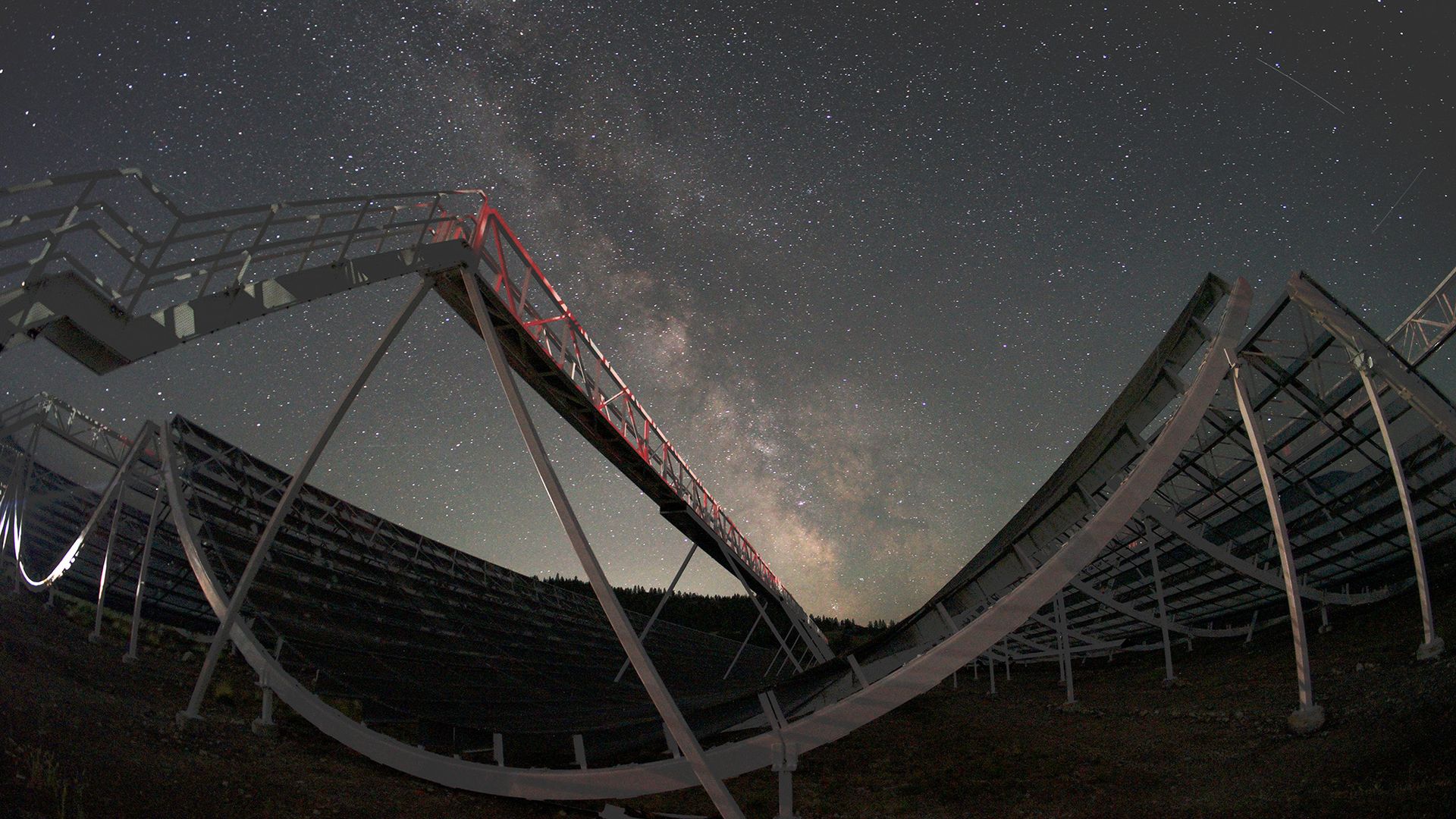
Scientists have a new tool for mapping the universe's perplexing acceleration.A Canadian telescope designed to chart the distribution of hydrogen gas across the ancient universe has proved it can do so using only its own data for the first time, without the help of other telescopes. The results took seven years to prove, but the payoff could be huge. According to the authors of a new study published Monday (Sept. 28) in The Astrophysical Journal, the telescope could give scientists a new, cost-effective way to study dark energy, the poorly understood force that is causing the universe to expand at an accelerating rate over time."Hydrogen is the most common element in the universe and the raw...

πŸ“… 2026-09-30 21:28:51    β€’    Live Science
Read Original Article β†’
Tracking the fin whale and the sperm whale in the Mediterranean
Science News

Tracking the fin whale and the sperm whale in the Mediterranean

Where are the great marine animals of the Mediterranean, such as the fin whale, the sperm whale or the bottlenose dolphin? How does their distribution change over a few weeks? All indications suggest that these species shift between marine areas in a remarkably short time and over relatively small spatial scales. Some species, such as the striped dolphin, maintain a relatively stable presence in certain areas, while others, such as the fin whale, move and concentrate in different areas from one observation campaign to the next.

πŸ“… 2026-09-30 21:20:17    β€’    Phys.org
Read Original Article β†’
Anti-fibrotic drug could be repurposed to control cell communication
Science News

Anti-fibrotic drug could be repurposed to control cell communication

An experimental antifibrotic compound can dramatically alter how cells release the microscopic packages they use to communicate, according to new research from the University of Surrey. Researchers found that the compound, SD-208, which reduces scar tissue in organs, substantially reduced the release of extracellular vesicles, microscopic packages that cells use to carry proteins and other biological signals to neighboring and distant cells.

πŸ“… 2026-09-30 21:20:13    β€’    Phys.org
Read Original Article β†’
Scientists in 1960 predicted Friday 13 November 2026 will be 'Doomsday.' Should you be worried?
Science News

Scientists in 1960 predicted Friday 13 November 2026 will be 'Doomsday.' Should you be worried?

In 1960, Science, one of the world's leading science journals, published an article with an unambiguous title: Doomsday: Friday, 13 November, A.D. 2026. It predicted that on this future dateβ€”just over a month from todayβ€”the human population would approach infinity and effectively annihilate itself.

πŸ“… 2026-09-30 21:10:01    β€’    Phys.org
Read Original Article β†’
Fossil long known as world's oldest reptile dethroned
Science News

Fossil long known as world's oldest reptile dethroned

For nearly 30 years, a small fossil from Scotland has been celebrated as one of the earliest known reptiles. A new study out today in Nature and led by researchers at the American Museum of Natural History and the University of Oxford, in collaboration with the European Synchrotron Radiation Facility, is rewriting that story.

πŸ“… 2026-09-30 21:00:02    β€’    Phys.org
Read Original Article β†’
Page 77of 176   β€’   4,209articles