Latest Science & Research News

Stay informed about scientific discoveries, research developments and new findings from around the world.

Latest News

View All →
Archaeologists discover the oldest dwelling in the Western Hemisphere at a 13,800-year-old site in Alaska
Science News

Archaeologists discover the oldest dwelling in the Western Hemisphere at a 13,800-year-old site in Alaska

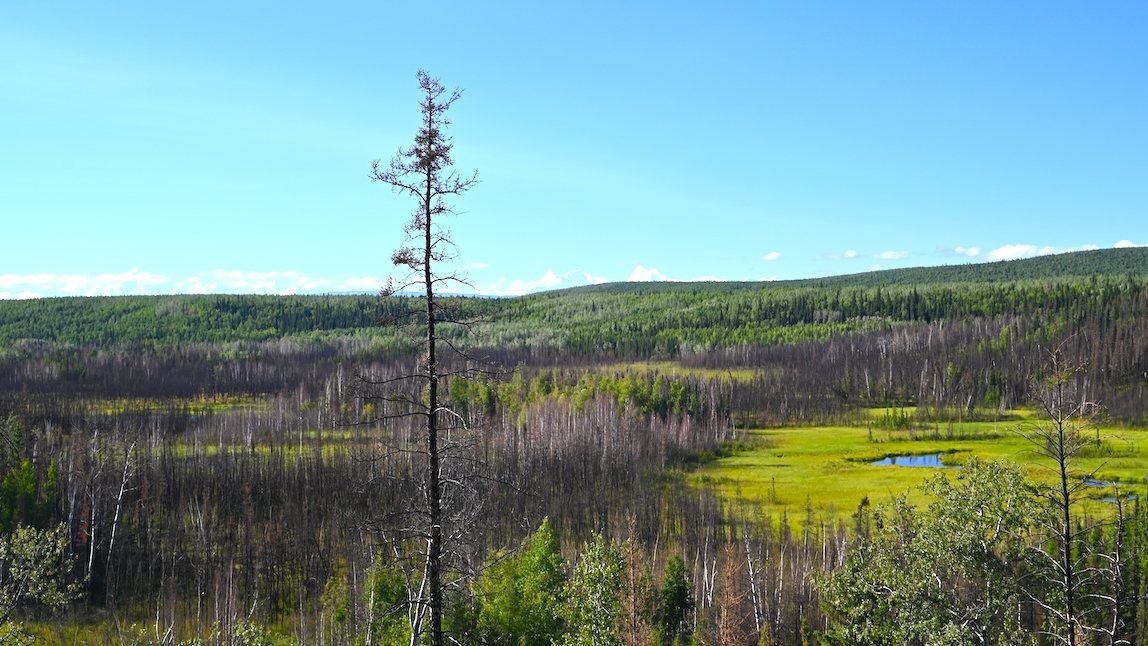
Archaeologists digging at a 13,800-year-old site in interior Alaska have unearthed thousands of artifacts and fossils, including what may be the bones of the earliest domesticated dogs in the Americas, the earliest needles and dwellings in the Western Hemisphere, and stone tools that reveal cultural connections across the Bering Land Bridge.At a site called Shégˊ Xdaltthˊíˊ (which means "They Were There" in the Alaska Native Athabascan language), about 34 miles (55 kilometers) southeast of Fairbanks, archaeologists have excavated an encampment that some of the first people to settle in North America used off and on for a millennium. Shégˊ Xdaltthˊíˊ is located in eastern Beringia, the geogra...

📅 2026-10-16 20:54:58    •    Live Science
Read Original Article →
Physicists froze a 'necklace' of atoms — and witnessed a quantum phenomenon predicted 100 years ago
Science News

Physicists froze a 'necklace' of atoms — and witnessed a quantum phenomenon predicted 100 years ago

"Necklaces" of ultracold atoms have provided new evidence to support a nearly 100-year-old quantum theory.In 1931, physicists were trying to use quantum mechanics to explain why some materials are magnetic. Then, a young physicist named Hans Bethe looked at a single row of electrons. Each electron's spin can point up or down. Bethe worked out the math for how such a row behaves and found that if a few spins in the row flip, they can stick together and travel down the row as a single unit.Decades later, physicists found that Bethe's method also works for larger particles moving along a line, such as atoms. If those particles attract each other, the math predicts they will bind into clusters c...

📅 2026-10-16 20:45:06    •    Live Science
Read Original Article →
Judging strangers' preferences may actually be easier when they're less like our own
Science News

Judging strangers' preferences may actually be easier when they're less like our own

Researchers already know that humans have a tendency to use egocentric anchoring—a cognitive bias in which people use their own preferences, beliefs and perspectives as a mental starting point (or anchor) to understand or predict what another person thinks, feels or prefers. This is not necessarily a sign of selfishness or self-importance, but a way for us to better understand others.

📅 2026-10-16 20:40:02    •    Phys.org
Read Original Article →
Climate warming can slow how tree roots feed soil microbes
Science News

Climate warming can slow how tree roots feed soil microbes

A plant's roots do much of their work out of sight, pulling in water and nutrients and holding the plant in place. That makes it hard to see how plants respond when conditions underground change, and how a warming climate affects them. New Dartmouth-led studies look at the strategies plants use below the surface to adapt and survive.

📅 2026-10-16 19:40:01    •    Phys.org
Read Original Article →
Light and ultrasound reveal renewable routes to compounds for pharmaceutical research
Science News

Light and ultrasound reveal renewable routes to compounds for pharmaceutical research

Sustainable packaging is only the beginning. What a medicine is made from—and how its ingredients are produced—matters just as much. Yet the synthesis of compounds for pharmaceutical research can still depend on fossil feedstocks, high temperatures, strong oxidants and metals that raise costs and complicate purification. Two recently published studies from Colmenares' group at IPC PAS demonstrate that cleaner chemistry can begin at the level of a single chemical bond. The studies are published in the journal Ultrasonics Sonochemistry and Chemistry—A European Journal.

📅 2026-10-16 19:20:01    •    Phys.org
Read Original Article →
World-record intensity in attosecond hard-X-ray pulses could unlock closer study of electrons in atoms and molecules
Science News

World-record intensity in attosecond hard-X-ray pulses could unlock closer study of electrons in atoms and molecules

Researchers used the European XFEL to create X-ray flashes that were not only extremely short but also reached record intensity for this type of pulse. The researchers focused the X-rays to an area roughly 100,000 times smaller than the cross section of a typical human hair. This concentrated the X-ray light into a tiny but extremely powerful spot. The method could enable detailed studies of how electrons behave in atoms and molecules and, in the long term, could even allow researchers to control electrons during chemical reactions. The team has now published the results of the experiment, carried out in April 2026, in the journal Optica.

📅 2026-10-16 19:10:01    •    Phys.org
Read Original Article →
Automated essay assessment can grade writing more accurately across topics, study finds
Science News

Automated essay assessment can grade writing more accurately across topics, study finds

An artificial intelligence (AI) model can score English essays with improved accuracy across different writing topics, according to work published in the International Journal of Continuing Engineering Education and Life-Long Learning. The tool could help schools assess student work more efficiently while reducing inconsistencies in grading.

📅 2026-10-16 19:00:22    •    Phys.org
Read Original Article →
Spiny dogfish blood contains a hormone long thought absent in sharks
Science News

Spiny dogfish blood contains a hormone long thought absent in sharks

Cortisol is a hormone that helps humans and many other animals regulate their energy use and respond to changing conditions. For a long time, sharks and rays were believed to rely on a different steroid hormone for these functions, without producing cortisol themselves. Now, a new study of North Pacific spiny dogfish, a species of small shark, challenges this view.

📅 2026-10-16 19:00:01    •    Phys.org
Read Original Article →
Maxwell's demon learns to turn concealed information into usable energy for microscopic systems
Science News

Maxwell's demon learns to turn concealed information into usable energy for microscopic systems

Since its introduction more than 150 years ago, the thought-provoking idea of Maxwell's demon has profoundly shaped our understanding of the relationship between information and energy. Maxwell's demon is an imagined microscopic gatekeeper that exploits information at the microscopic scale to produce macroscopic work.

📅 2026-10-16 18:50:01    •    Phys.org
Read Original Article →
Finding their sense of direction: Cell movement helps tissues establish polarity
Science News

Finding their sense of direction: Cell movement helps tissues establish polarity

From the hairs on our arms to the microscopic sensory structures of the inner ear, many tissues in the body are built with a clear sense of direction. To build these structures throughout development, individual cells must establish which way they are facing—and coordinate that orientation with cells around them. If they get this wrong, tissues may fail to form, form improperly or fail to function.

📅 2026-10-16 18:40:08    •    Phys.org
Read Original Article →
Glowing liquids could help protect products from counterfeiters using distinctive ultraviolet light signatures
Science News

Glowing liquids could help protect products from counterfeiters using distinctive ultraviolet light signatures

Researchers at Nottingham Trent University have developed room-temperature liquids containing chemical elements that produce distinctive patterns of light. They say the materials could provide a flexible new approach to optical tagging and anti-counterfeiting, while being compatible with existing processing and printing technologies.

📅 2026-10-16 18:20:14    •    Phys.org
Read Original Article →
What makes a place ready for radical innovation? Researchers say resident openness matters
Science News

What makes a place ready for radical innovation? Researchers say resident openness matters

Why do some cities embrace new technologies and business models while others are slower to take them up? Economic conditions, infrastructure and access to technology clearly matter. But a new study from the University of Amsterdam and the University of St Gallen suggests there is another factor that has received much less attention: the psychological openness of the local population. Regions where people are more open to new experiences and unfamiliar ideas are more likely to be early adopters of radical innovations, the study says.

📅 2026-10-16 18:20:11    •    Phys.org
Read Original Article →
Supercooled clouds over the highest mountains respond differently to climate change
Science News

Supercooled clouds over the highest mountains respond differently to climate change

Most studies of how clouds are responding to climate change focus on clouds over the oceans, rather than over mountains. Those that do focus on mountain clouds tend to explore cloud microphysics rather than long-term trends in cloud phase. But understanding cloud behavior over regions such as the Tibetan Plateau, which supplies water to hundreds of millions of people, is critical—especially as diminishing snowpack and altered precipitation patterns threaten this critical water source.

📅 2026-10-16 18:10:01    •    Phys.org
Read Original Article →
Page 27of 171   •   4,090articles