
Science News
Japan just hit a new longevity milestone
More than 100,000 people in the country are over 100 years old
📅
2026-09-16 18:49:00
•
Scientific American
Read Original Article →
Stay informed about scientific discoveries, research developments and new findings from around the world.
More than 100,000 people in the country are over 100 years old

Whether on a windowpane at home or during the industrial cleaning of computer chips: droplets sliding over solid surfaces become electrically charged. Yet the physical mechanism behind this charging remains a subject of debate. This charging is usually attributed to the exchange of charged particles (ions) at the interface between the droplet and the surface.

It must be tough being a judge for the world's most prestigious environmental prize: Imagine having to choose between an ingenious machine that removes microplastics from a river in Europe or a company in East Africa that sells clean cookstoves through affordable weekly installments.

When we tell a dog "no" and it resists temptation, what happens in its brain? New research from the Department of Ethology at ELTE and the HUN-REN Research Centre of Natural Sciences suggests that dogs may do more than respond automatically: When they restrain their behavior, their brains show a pattern of activity resembling the human neural signature of self-control. The study is published in the journal Animal Cognition.

MIT’s Kavli Institute for Astrophysics and Space Research (MKI) is launching a pilot artist-in-residence program to facilitate cross-disciplinary dialogue between art, science, and the public. MKI is a world-leading institution for research in astrophysics, combining more than 60 years of expertise in space and ground-based instrumentation development with the intellectual energy of MIT’s faculty, research and technical staff, and students in the departments of Aeronautical and Astronautical Engineering; Earth, Atmospheric and Planetary Sciences; and Physics.During the 2026-27 academic year, internationally acclaimed ultra-contemporary artist Amy Karle will work as the program’s inaugural ar...

Researchers at Johannes Gutenberg University Mainz (JGU) have gleaned new insights into ancient water management in the French region around Nîmes by analyzing carbonate deposits within the Roman aqueduct that features the famous Pont du Gard bridge. Among other findings, the aqueduct—built around 50 A.D.—was expanded to include an additional water source after 11 years of operation; this event coincided with a historically documented dry spell. A century after the aqueduct's construction, the water supply to the city was deliberately throttled; it is likely that some of the water was diverted to agricultural land in the surrounding area instead.

Stretching across much of eastern England, the Fens produce a third of the country's vegetables and support tens of thousands of jobs. Yet around 33% of the region lies below average sea level, while 87% is below the highest spring tides.

Knoepflmacher's research interests included Victorian literature and culture, English and American children’s books, 19th-century poetry and the English novel. He was among the first to recognize the scholarly value of children’s literature.

Bipedalism, or walking on two legs, is one of the key features that distinguishes humans from other apes. But when and why our ancestors transitioned from a life often spent in trees to a life spent almost exclusively on the ground remains a subject of debate.

Allowing petty offenders in South Africa to remain in the community may reduce their risk of committing serious crimes compared with imprisonment, according to a study published in PLOS One by Farai Nyabadza of the University of Johannesburg, South Africa.

Republicans and conservatives are more likely than Democrats or liberals to justify political violence in 17 surveyed situations, according to a study published in PLOS One by Garen J. Wintemute of the University of California, Davis, and colleagues.

When picturing a scaled, toothy Tyrannosaurus rex stomping across North America, building nests and eating other dinosaurs, it's easy to forget that scientists have gleaned everything we know about T. rex from clues left more than 60 million years ago. While the presence of fossils in Alaska suggested that this prehistoric ancestor of birds was already on the evolutionary path from cold-blooded reptile to warm-blooded avian, there wasn't a way to take T. rex's temperature—until now.

It's no secret that plastic and other human trash are a problem for marine life, but our understanding has long focused on the ocean's surface. As described in a study published in PLOS One, a more complete picture is coming into focus, revealing that even some of our planet's greatest depths have become home to our debris.

By evaluating the health of waterways across the U.S., researchers have identified a network encompassing about one-third of rivers and streams that, if conserved and restored, could sustain the nation's freshwater biodiversity in the face of habitat degradation and climate change. Mark Anderson of The Nature Conservancy, U.S., led the new study, published Sept. 16, 2026, in the journal PLOS One.

Right whales forage near the water's surface at night, putting them at greater risk of potentially fatal collisions with boats, Jay Kirkham at Dalhousie University, Canada, and colleagues report Sept. 16, 2026, in the journal PLOS ONE.

X-ray technology and artificial intelligence—along with the discovery of lead in the ink of fragments from a collection of ancient Roman scrolls—could soon help scientists read long-lost texts buried by the eruption of Mount Vesuvius in 79 CE, according to a study published Sept. 16, 2026, in the journal PLOS One by Douglas Seiler, an affiliate of the University of California, Berkeley, U.S.; Jacob Michael LaManna of the National Institute of Standards and Technology, U.S.; David Kreimer of the University of California, Berkeley, U.S.; and colleagues.

MIT researchers have created a new computing platform that could be used to develop intelligent and adaptive next-generation electronics that can simultaneously perform multiple functions, like computing and memory, all within one extremely compact, energy-efficient device.Such a platform opens opportunities for low-power edge computing applications, interactive medical and environmental monitoring systems, and smart robots.The researchers accomplished this by leveraging the unique mechanical response of soft polymers at the nanoscale. A mechanical response is how a structure changes when a force is applied to it. They harnessed this response to create tiny mechanical devices that use reconf...
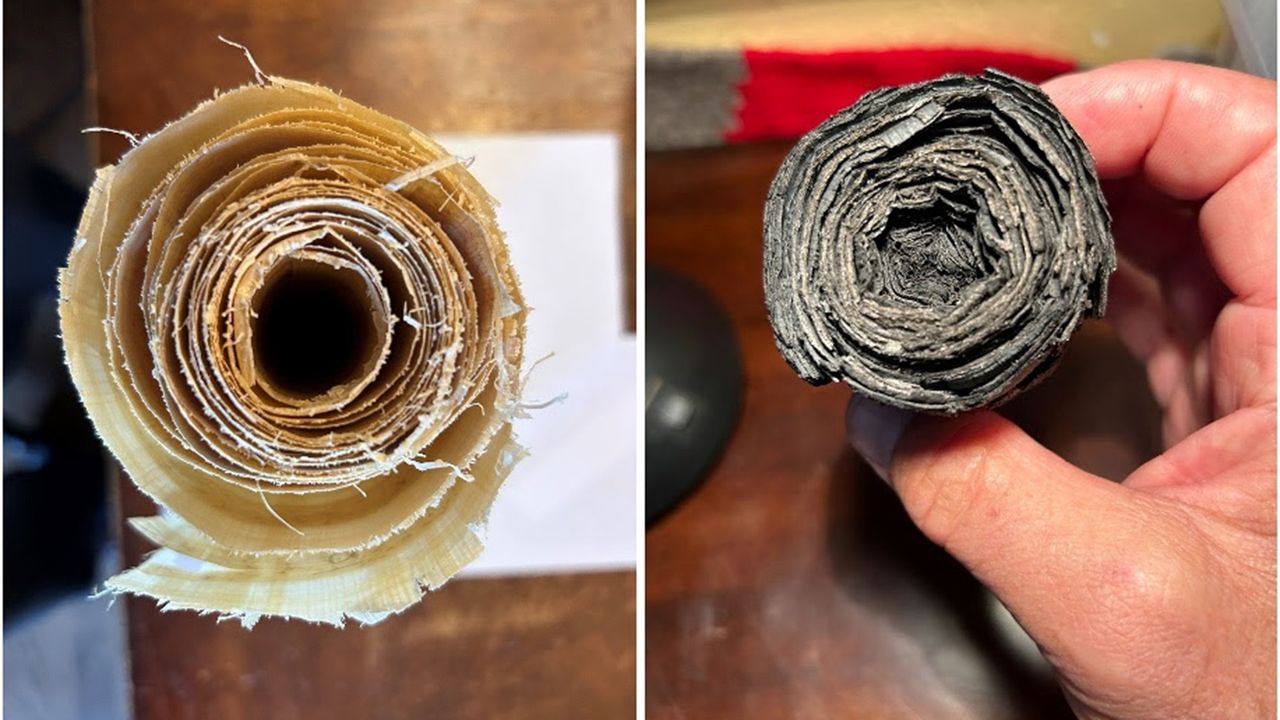
The long-lost words of ancient philosophers may finally be revealed nearly 2,000 years after the violent eruption of Mount Vesuvius scorched and buried them, thanks to a heavy metal that was used in the ink that penned them, a new study finds.The new research investigates the lead-enriched ink within some of the nearly 2,000 papyrus scrolls, which were found at a villa in the ancient town of Herculaneum in the 1750s. In a new paper, a team created modern scrolls with leaded ink, scorched them and found that they could read the text after using several techniques, including X-ray technologies and artificial intelligence (AI). "It's amazing what you can get electrons to do," Douglas Seiler, a ...
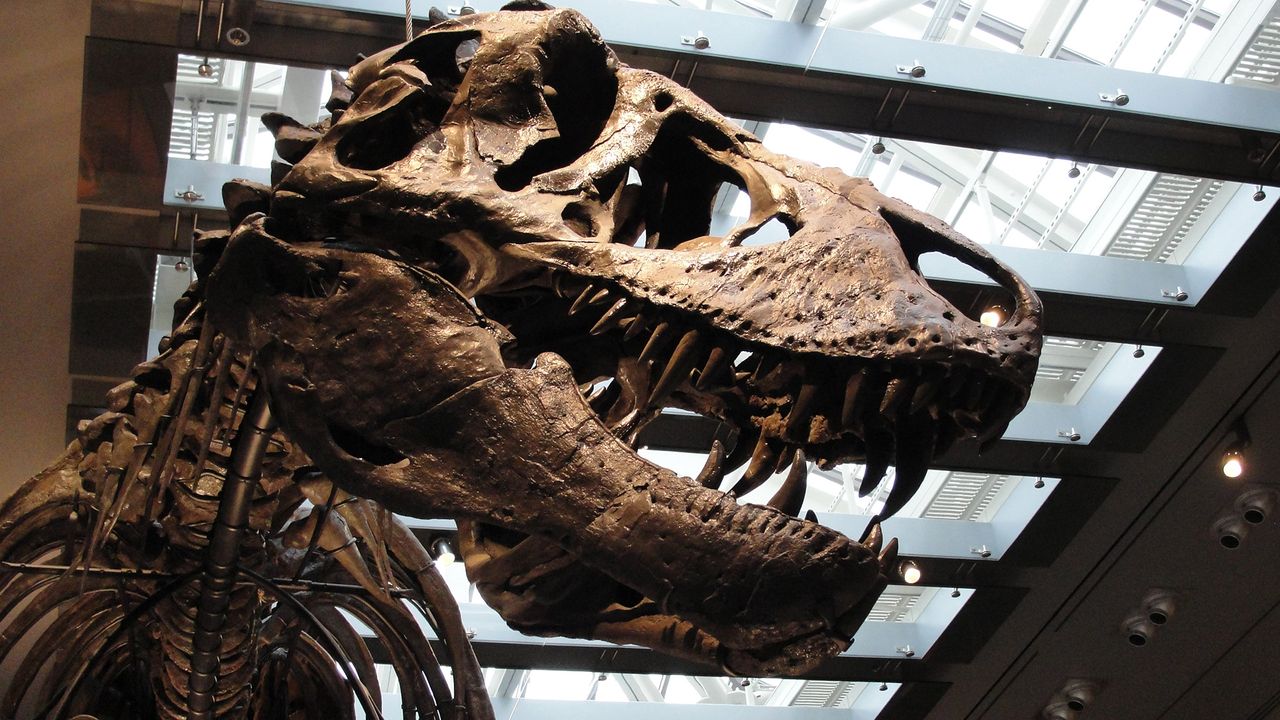
Tyrannosaurus rex was a hottie with a body temperature similar to our own, according to a new analysis of their teeth.The finding supports the idea that T. rex was a fast, energetic predator and scavenger, not an animal that basked in the sun to gain energy like most modern-day reptiles.T. rex, which lived between about 68 million and 66 million years ago, at the end of the Cretaceous period (143.1 million to 66 million years ago), was one of the largest carnivorous dinosaurs that ever lived.Previous studies have already suggested that T. rex and its relatives were warm blooded, but now scientists have estimated the dinosaur's body temperature for the first time by studying different isotope...

The crater site, before and after impactNASA/Mark S. Robinson et al. 2026 A newly formed crater on the moon is teaching us about our nearest neighbour’s complex geology. The crater, formed by an asteroid impact in 2024, is the largest that we’ve ever watched form in real time. It was first spotted last year, when researchers compared sets of images taken by NASA’s Lunar Reconnaissance Orbiter in both 2024 and 2025, and was named McGetchin crater. According to models of how often impacts occur on the moon, one this big – about 222 metres across – is only expected to occur about once every 132 years. While the moon has many larger craters, watching one as it forms and evolves presents a unique...

The amount of dust in the atmosphere has fallen, which is good for our lungs, but is a loss for ecosystems that depend on wind-borne nutrients

Tyrannosaurus rex was probably a warm-blooded predatorOrla/Shutterstock The world’s most famous dinosaur, Tyrannosaurus rex, was probably warm-blooded like birds and mammals, new evidence, obtained from 66-million-year-old tooth enamel, suggests, adding weight to previous findings. Scott Persons at South Carolina State Museum, who wasn’t involved in the new study, says the research means “the opening to the last Jurassic World flick was one big pile of Hollywood bunk”. “That film premised that dinosaurs could not survive in the modern world, except near the equator,” says Persons. “Not so. The evidence indicates that a Tyrannosaurus would be comfortable in subtropical and even mild climates....
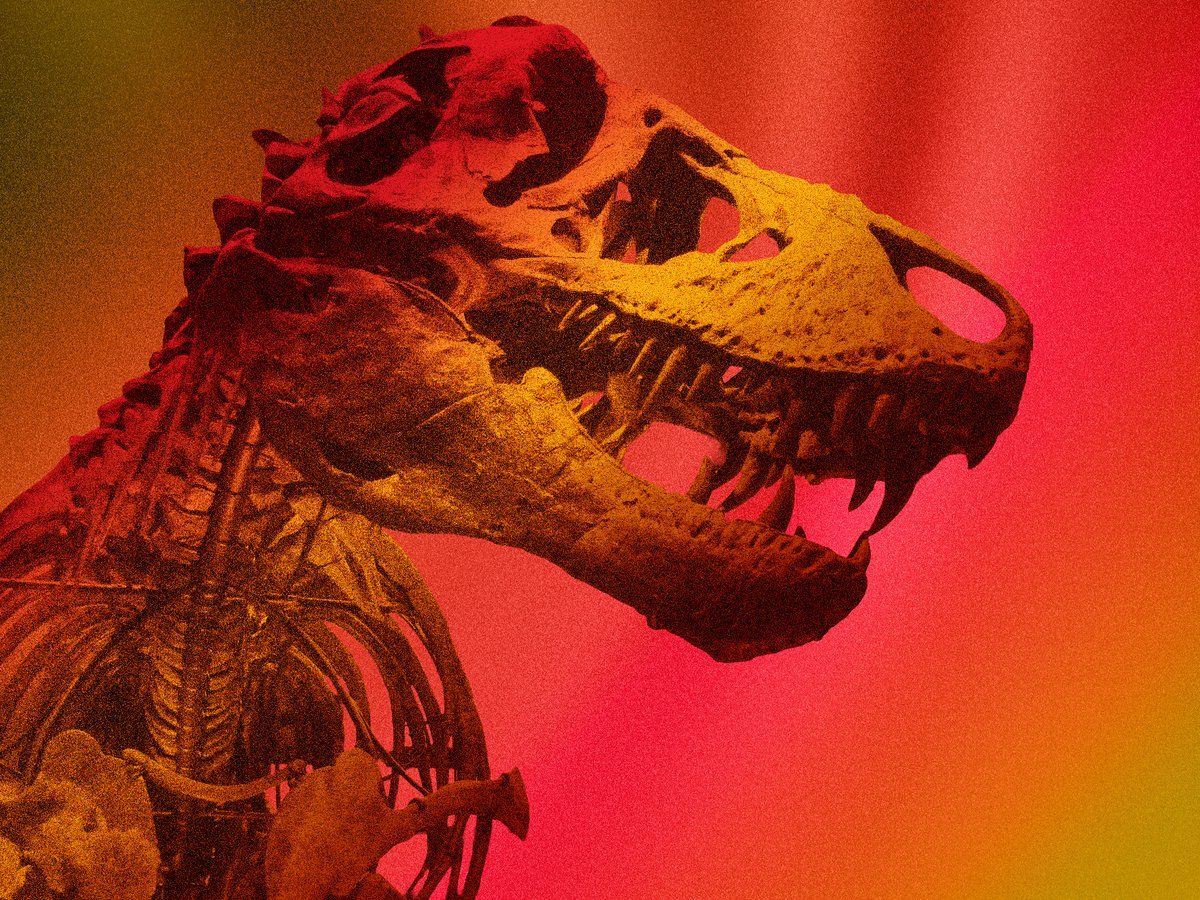
The dinosaurs were once considered reptilian, but the new results suggest we may need to rethink their evolution

Both the president and Secretary of Health and Human Services Robert F. Kennedy, Jr., have made numerous false claims about the vaccines’ efficacy and safety