Latest Scientific Discoveries

All News β†’
AI helps detect media bias, informing voters and news consumers
Science News

AI helps detect media bias, informing voters and news consumers

In 2024, a collaborative Penn venture introduced a more objective way for people to examine how different outlets cover the same events and ultimately decide how they perceive and use information shared in the media. The Media Bias Detector, conceived in Penn's Computational Social Science (CSS) Lab, a joint venture of Penn Engineering, the Annenberg School for Communication and the Wharton School, uses artificial intelligence to analyze news articles for characteristics including topic, tone, political lean, and the facts and people included in coverage.

πŸ“… 2026-10-15 16:00:12    β€’    Phys.org
'We're not a competitor to fusion. We are fusion': Inside the race to harness unlimited solar power in space
Science News

'We're not a competitor to fusion. We are fusion': Inside the race to harness unlimited solar power in space

The year is 2050, and as the sun sets, the night's first constellations emerge in perfect rows. But these amber-glowing arrays aren't stars at all; they're satellite clusters, harvesting the day's last rays before beaming their power back to Earth.If it reads like science fiction, that's because it started that way. Called space-based solar power (SBSP), the concept featured prominently in the techno-utopian imaginations of 20th-century visionaries and writers. But for decades, it was dismissed β€” a pie in the sky proposal.Now, as a new space race heats up, governments and private companies in China, the U.S., the U.K. and Japan are developing several projects to reassess the idea's feasibili...

πŸ“… 2026-10-15 16:00:00    β€’    Live Science
Why are pets scared of fireworks?
Science News

Why are pets scared of fireworks?

Fireworks are an integral part of many celebrations and cultural events. With their pretty colors, spectacular sights and big bangs, fireworks are a popular attraction for many people.

πŸ“… 2026-10-15 15:40:13    β€’    Phys.org
Quantum calculations reveal how spin defects lose energy
Science News

Quantum calculations reveal how spin defects lose energy

When light hits a tiny defect embedded in a solid material like diamond or silicon carbide, it can kick the defect's electrons into an excited state. These spin defects have the potential to be used as stable, readable qubits for quantum technologies, for example, quantum sensing. But modeling the full physics of their energetics over timeβ€”a key step in developing spin defects into new technologiesβ€”is a challenging task.

πŸ“… 2026-10-15 15:40:09    β€’    Phys.org
Solving the mystery behind a flightless beetle's transatlantic journey
Science News

Solving the mystery behind a flightless beetle's transatlantic journey

They can't fly or swim, so why do their closest relatives appear on different continents? Grey Gustafson, an associate professor in the Department of Biological Sciences, discovered through DNA sequencing that the ancestors of some of today's tiger beetles existed in South America and Africa before the two continents separated. What's more, North America's largest tiger beetles are related to these ancestral South American giant tiger beetles.

πŸ“… 2026-10-15 15:20:11    β€’    Phys.org
Scorecard: Colombia gets top marks while high-emitting countries doing too little to protect health from climate change
Science News

Scorecard: Colombia gets top marks while high-emitting countries doing too little to protect health from climate change

The latest Healthy NDC Scorecard, published by the Global Climate and Health Alliance, finds that, Colombia integrates health most deeply into its national climate plan, closely followed by Nigeria and Cambodia. Conversely, the climate commitments of the governments of Japan, New Zealand and India fail to adequately consider health, while high-emitting economies, including EU members, China, Brazil and the U.K., refer to health in their national climate plans but do not match this with the ambitious emissions reduction targets required to protect health.

πŸ“… 2026-10-15 15:00:15    β€’    Phys.org
Mysterious hole in Neanderthal shoulder blade may have been a 'kill shot' from a wooden spear, according to archaeologists
Science News

Mysterious hole in Neanderthal shoulder blade may have been a 'kill shot' from a wooden spear, according to archaeologists

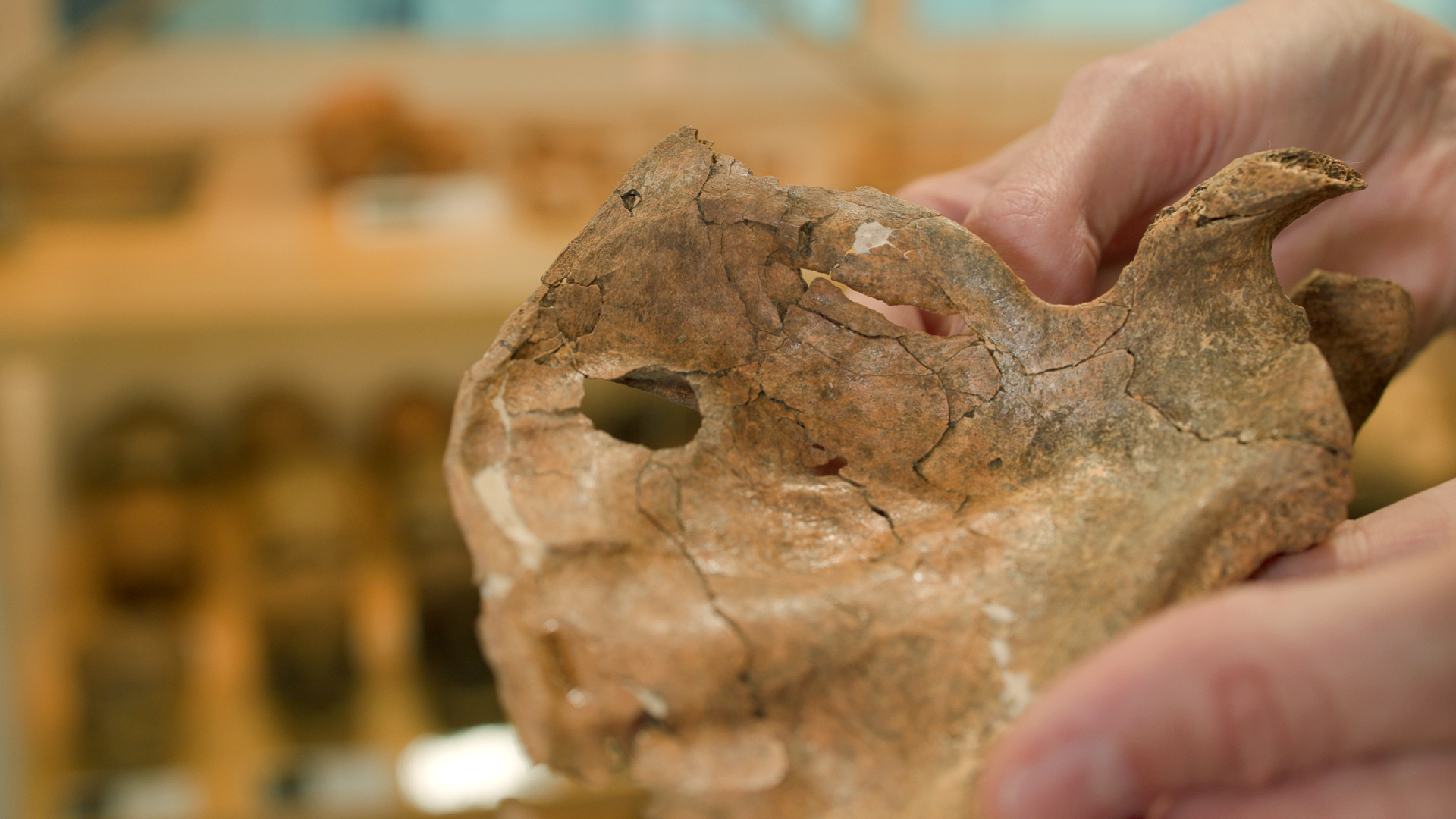
A Neanderthal who was buried 75,000 years ago in Shanidar Cave in Iraq died from a wooden spear straight through the chest, archaeologists have revealed. While it's impossible to know exactly what happened, the violence may have been a targeted hit. "The position of the wound and the force required to push it right through the Neanderthal's body bear the hallmarks of an intended kill shot directed towards the heart," study first author Emma Pomeroy, a paleoanthropologist at the University of Cambridge, said in a statement. In a study published Thursday (Oct. 15) in the journal Scientific Reports, Pomeroy and co-authors analyzed the bones of Shanidar A, a Neanderthal who died violently at abo...

πŸ“… 2026-10-15 15:00:00    β€’    Live Science