Escape rooms give health care students a safe place to get things wrong
The buzzer goes off. Three occupational therapy students are convinced they have worked out what should happen to their patient next. They are wrong.
Explore the latest scientific discoveries, science news, breakthroughs and developments from around the world.
The buzzer goes off. Three occupational therapy students are convinced they have worked out what should happen to their patient next. They are wrong.
Elephants shape the African savanna. They consume huge amounts of forage, dig for water, topple trees and affect all the animals around them. So, what happens to their outsized presence after these iconic animals pass away?
Australian scientists have used high-speed video to uncover the unique mechanism that allows a honey bee's stinger to continue to pump venom into its target even after it has separated from the bee's body.
NASA is taking an unusual approach to testing heat shields that can keep astronauts safe as they return from missions to the moon and Mars: taking out the trash.
An OpenAI agent was supposed to be researching public healthcare spending, but it broke into an Australian government website instead. The June 18 hack, which saw the bot gain authorized entry into Australia's Medicare Statistics Reporting Service and access three other government systems, occurred after the AI agent encountered blocks while looking for information but "didn't accept 'no' for an answer," Australian Prime Minister Anthony Albanese said during a September 24 news conference in New York.The incident has ignited a media firestorm around OpenAI and the launch of an intensifying parliamentary inquiry. The portal contains aggregate Medicare and pharmaceutical statistics and is sepa...
Scientists know APOE4 raises Alzheimerβs risk. A surprising change in blood vessel cells may help explain how.
In heat wave-like temperatures, coast redwoods' photosynthesis slows down, which may put one of Earth's most efficient carbon storers in jeopardy.
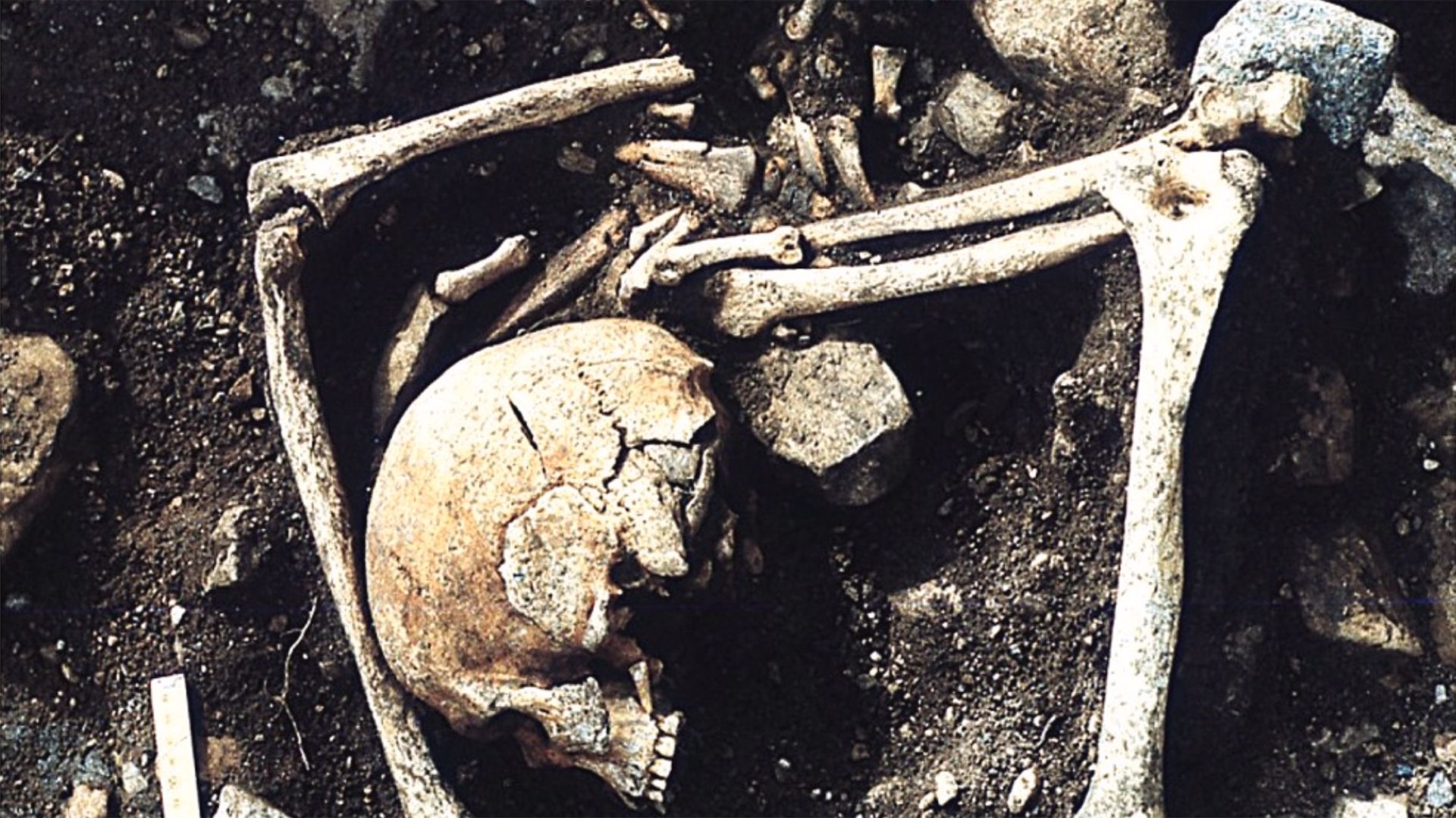
Six people buried in a single grave in Latvia more than 1,000 years ago may have been killed in a bloody Viking raid, a new study suggests.Genetic research into the deceased β four men, a boy and a girl β reveals family connections: The boy was the son of one of the men, while another man was a third-degree relative, perhaps a first cousin or great uncle, the researchers found.The father, the relative, and one other man died from "sharp force" injuries β maybe wounds from an ax or a sword; but it's unknown how the other three individuals died, the researchers reported in the study, which was published in the September issue of the Journal of Archaeological Science: Reports. One possibility i...
Gravity, the attraction between objects with mass, is the weakest of the four fundamental forces governing physical processes. Detecting the tiny gravitational pull of objects that are just a few millimeters in size and have a very small mass is extremely challenging.
Rabies virus detection in cell cultures could soon become faster and more accessible, thanks to the world's first AI system for this purpose, developed by researchers at the University of Surrey's Institute for People-Centered AI (PAI) in collaboration with the Rabies and Viral Zoonoses team at the Animal and Plant Health Agency (APHA).
The uneven distribution of oil extraction's impacts and benefits helps explain why some Indigenous communities accept it, newly published research shows.
University of Phoenix researchers have published a new peer-reviewed study examining how stress, self-regulation, resilience, belonging, psychological safety and generative artificial intelligence (GenAI) interact in the experiences of nontraditional online students. The article, "Designing for Persistence in Online Higher Education: A Trauma-Informed, GenAI-Integrated Model for Non-Traditional Learners," was published in Innovative Higher Education.