Science News

Latest science news, discoveries and scientific developments.

New research shows how water would behave on the moon
Science News

New research shows how water would behave on the moon

As humanity looks toward future bases on the moon, plant cultivation will be critical for sustaining life there. Plants can provide food, oxygen, medicine, water purification and waste recycling, making them indispensable for lunar development.

πŸ“… 2026-10-02 15:40:15    β€’    Phys.org
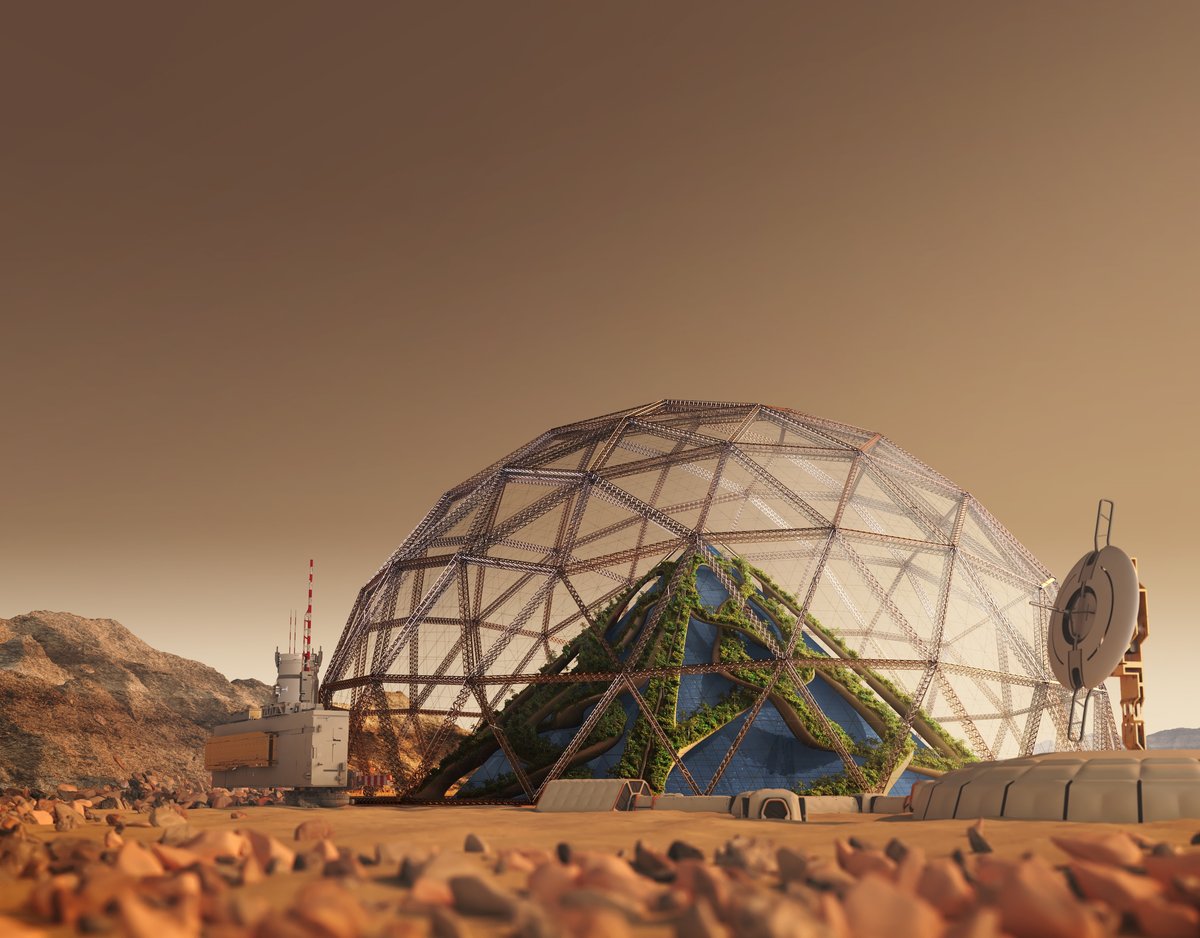
Can bioengineered bacteria help terraform Mars?
Science News

Can bioengineered bacteria help terraform Mars?

The nonprofit start-up Pioneer Labs claims to have made the first-ever β€œmicrobe for Mars.” Other experts aren’t so sure

πŸ“… 2026-10-02 15:30:00    β€’    Scientific American
How much are the world's oceans warming? New method reveals double-digit percentage gaps from climate models
Science News

How much are the world's oceans warming? New method reveals double-digit percentage gaps from climate models

The world's oceans behave like a thermometer: As the water warms, it expands and sea levels rise. Geodesy researchers at the University of Bonn are able to measure this and determine how much the oceans are warming. For individual ocean basins, their method has revealed significant deviations from model calculationsβ€”in some cases in the double-digit percentage range.

πŸ“… 2026-10-02 15:20:12    β€’    Phys.org
How prepared are you for a disaster?
Science News

How prepared are you for a disaster?

This year's "super" El Nino means the U.S. will likely face a higher risk of stormy weather and flooding, so experts are recommending Americans stock up on food.And flooding is just one of the natural disasters people will face β€” many people are at risk of wildfires, power outages or earthquakes. While some disasters are unexpected, preparation can make a significant difference in how much they impact peoples' daily lives. Related stories14 of the deadliest natural disasters in historyThe devastating Nepal floods highlighted the danger of glaciers. Here's where the next disaster may occur.Extreme heat waves are making our cities buckle. Investing in urban nature is no longer optional.But is ...

πŸ“… 2026-10-02 15:01:33    β€’    Live Science
A 'reality check' for lab-grown human embryo models
Science News

A 'reality check' for lab-grown human embryo models

University of Sydney researchers have developed a new way to test how closely lab-grown biological models resemble real human embryos, finding that while some models perform well, none yet fully capture the complexity of early human development.

πŸ“… 2026-10-02 15:00:29    β€’    Phys.org
Natural-material bricks aim to give urban birds alternatives to nesting with trash
Science News

Natural-material bricks aim to give urban birds alternatives to nesting with trash

It's spring, and Australian birds are building their nests. But with what? Alongside grass and twigs, birds are collecting our trash. In 2023, a global study found litter in the nests of 176 different bird species, with common culprits including cigarette butts, plastic bags and fishing nets.

πŸ“… 2026-10-02 14:40:20    β€’    Phys.org
Uranium forms rare triple bond with carbon in newly isolated compound
Science News

Uranium forms rare triple bond with carbon in newly isolated compound

In a study published in Nature Chemistry, an international team of researchers from Germany and the U.K., including chemists from The University of Manchester, has synthesized and characterized what they describe as the first isolable uranium Fischer-type carbyne, a compound in which carbon forms an unusual triple-bond interaction with uranium.

πŸ“… 2026-10-02 14:40:01    β€’    Phys.org
Protons ride moving waves to reach record energy with long-pulse lasers
Science News

Protons ride moving waves to reach record energy with long-pulse lasers

Imagine a proton catching a wave and surfing it to gain speed. While the imagery may seem wild, the premise of laser-driven ion acceleration has promise as an alternative to conventional accelerators. However, the ultrathin targets used to drive this increase in ion energy are vulnerable to the weak prepulse that precedes the main high-intensity laser pulse, meaning an adaptation in the process is necessary.

πŸ“… 2026-10-02 14:20:08    β€’    Phys.org
A conservation success story for New Zealand's heaviest insect
Science News

A conservation success story for New Zealand's heaviest insect

The success of a large-scale recovery program for wΔ“tāpunga/Little Barrier giant wΔ“tā, New Zealand's heaviest insect, has been officially documented in the New Zealand Journal of Zoology.

πŸ“… 2026-10-02 14:00:01    β€’    Phys.org
Are hypernovas real?
Science News

Are hypernovas real?

Uneven supernova explosions may explain the unusual mix of elements in Milky Way stars once thought to be evidence of hypernovas.

πŸ“… 2026-10-02 14:00:00    β€’    Science News
Mathematicians and AI in behind-the-scenes battle over what’s true
Science News

Mathematicians and AI in behind-the-scenes battle over what’s true

AI models are solving mathematics problems with increasing pace, and a technique called formalisation is key to demonstrating that their claimed solutions are indeed correct. But can we trust the formalisation process?

πŸ“… 2026-10-02 14:00:00    β€’    New Scientist
Two active magma reservoirs may lie beneath Masaya volcano, near 2 million people
Science News

Two active magma reservoirs may lie beneath Masaya volcano, near 2 million people

Masaya volcano in Nicaragua sits within 13 miles (21 kilometers) of 2 million people and is a popular tourist destination due to its lava lake. Penn State researchers recently found evidence of two new magma sources under the active volcano, highlighting what they called the critical importance of understanding transitions in volcanic behavior and shallow magma processes, especially when they potentially pose hazards to local communities.

πŸ“… 2026-10-02 13:40:06    β€’    Phys.org