Science News

Latest science news, discoveries and scientific developments.

Ancient DNA evidence narrows down when people first reached the Americas
Science News

Ancient DNA evidence narrows down when people first reached the Americas

One of the unresolved mysteries about the history of the Americas is when the first people arrived. Despite extensive debate centering on genetic, archaeological and environmental evidence, there is still no consensus or conclusive proof. Did they enter before, during or after the coldest period of the last ice age, known as the Last Glacial Maximum? Evidence from recent analysis of ancient DNA is providing fresh clues.

📅 2026-10-05 21:00:12    •    Phys.org
Standard 3D printers let labs build and adapt tools for bacterial research
Science News

Standard 3D printers let labs build and adapt tools for bacterial research

Studying microorganisms requires instruments with extremely high precision. Such instruments are expensive and take a long time to manufacture using traditional methods, which has slowed progress in the field. It has also been difficult for the biologists who use these instruments to participate directly in their development.

📅 2026-10-05 21:00:08    •    Phys.org
How game publishers set international prices: A study reveals four pricing approaches on Steam
Science News

How game publishers set international prices: A study reveals four pricing approaches on Steam

Although digital platforms make it possible to sell the same product globally, prices often vary across countries because of differences in purchasing power, currencies, taxation and other market conditions. At the same time, the transparency of online prices enables consumers to compare prices across regions easily. Companies therefore must balance local affordability with the need to avoid excessive international price differences.

📅 2026-10-05 20:40:07    •    Phys.org
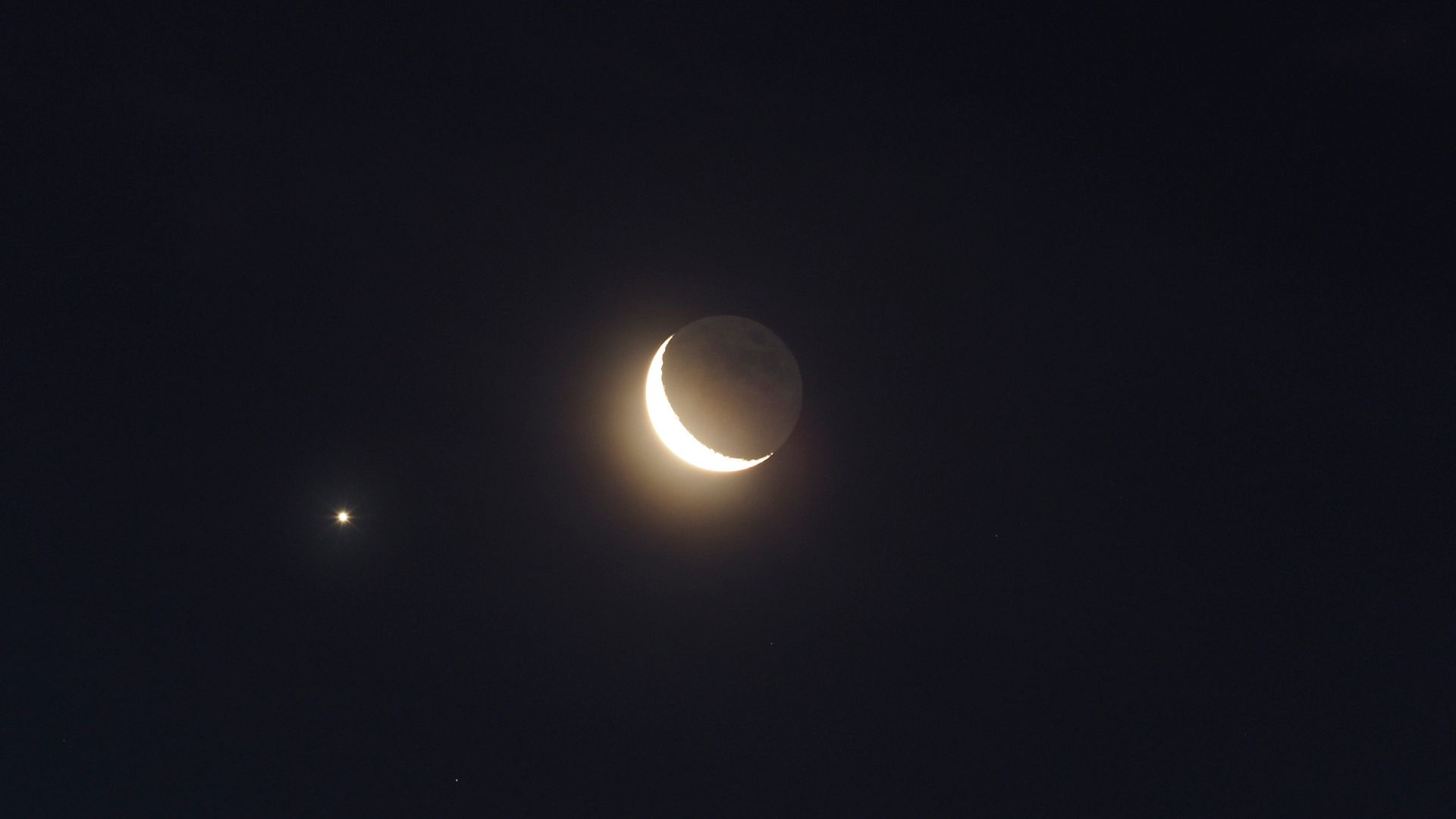
Jupiter will disappear behind the moon in a once-in-a-decade alignment tomorrow
Science News

Jupiter will disappear behind the moon in a once-in-a-decade alignment tomorrow

You may have watched the moon block out the sun during a solar eclipse, but have you ever seen it do that to a planet? Early Tuesday (Oct. 6) morning, skywatchers across much of eastern North America will have an opportunity to watch a crescent moon pass directly in front of Jupiter. The rare alignment won't happen again for 11 years.During the event, known as a lunar occultation, Jupiter will disappear behind the moon for up to about an hour before suddenly reappearing. The occultation will be visible before dawn from much of the eastern and central U.S., Canada and the Caribbean, while parts of Africa will experience the event during daylight, according to In-The-Sky.org.The moon will be a...

📅 2026-10-05 20:20:56    •    Live Science
A health app designed for teachers
Science News

A health app designed for teachers

A new app is designed to help teachers stay healthy in their day-to-day work. The digital tool is the result of a three-year collaborative project between the Technical University of Munich (TUM) and health insurance provider AOK Bayern.

📅 2026-10-05 20:20:21    •    Phys.org
Atomic motion could help push solar cells beyond conventional limits
Science News

Atomic motion could help push solar cells beyond conventional limits

The bulk photovoltaic effect (BPVE), a photoelectric effect that generates photocurrent without a p–n junction, can persist even when a material's average crystal structure remains centrosymmetric, a study from Institute of Science Tokyo has found. Researchers demonstrated this in CuCrP2S6, a van der Waals material that transitions from a noncentrosymmetric to a centrosymmetric average structure. The finding challenges the conventional view of BPVE and suggests a new strategy for enhancing photoelectric conversion.

📅 2026-10-05 20:20:16    •    Phys.org
Quantum systems never quite forget where they came from
Science News

Quantum systems never quite forget where they came from

Even the most chaotic quantum systems keep a permanent mark of their own past—a "quantum birthmark"—that never fades. Researchers from Tampere University, Harvard University and TU Dresden discovered the feature in their recent study. Their findings shed new light on the elusive relationship between classical and quantum mechanics. Looking ahead, these quantum birthmarks, along with related phenomena known as "scars," could eventually be harnessed to power next-generation nanoelectronics.

📅 2026-10-05 20:00:13    •    Phys.org
Unmowed strips attract insects, but many abandon partially mowed dikes
Science News

Unmowed strips attract insects, but many abandon partially mowed dikes

Municipalities are increasingly mowing dikes and verges in stages, so that insects can make longer use of the plants growing there. Mowing is essential to keep a dike strong, explains ecologist Constant Swinkels of Radboud University. "If you don't mow, trees or sturdy shrubs such as blackberries may start to grow. You don't want that, because their roots are so thick that they can cause dikes to collapse."

📅 2026-10-05 20:00:06    •    Phys.org
A novel path to fusion ignition: Heat first, then add fuel
Science News

A novel path to fusion ignition: Heat first, then add fuel

For more than 70 years, fusion energy researchers have used a particular equation to judge whether a plasma would stay hot and dense enough—for long enough—to reach a point where it could sustain itself without any more external power added. While that equation marks the finish line, also known as ignition, it says nothing about the best way to reach it. New research from the U.S. Department of Energy's (DOE) Princeton Plasma Physics Laboratory (PPPL) maps a path to ignition conditions using far less energy than any other path.

📅 2026-10-05 19:40:13    •    Phys.org
Russia is using Ukraine's children to win its occupation—and the wider war
Science News

Russia is using Ukraine's children to win its occupation—and the wider war

A year or so after the full-scale invasion of Ukraine, the city of Murmansk in Russia's Arctic northwest marked its annual regional day with a celebration for children. Alongside the sons and daughters of Russian soldiers stood children taken from the occupied Prymorskyi district of Ukraine's Zaporizhzhia region.

📅 2026-10-05 19:20:01    •    Phys.org
Local tipping points in dune landscapes: How does a dune system organize itself?
Science News

Local tipping points in dune landscapes: How does a dune system organize itself?

Building with nature is an important concept in our coastal defense. After all, by harnessing natural processes, we are more resilient to sea level rise. A good understanding of these processes is therefore indispensable. Ecologist Paul Berghuis, affiliated with Utrecht University and the Royal Netherlands Institute for Sea Research (NIOZ), delved into the world of dune formation and discovered that within young dune landscapes, dunes and grasses do not arrange themselves randomly but follow a fixed pattern.

📅 2026-10-05 19:00:20    •    Phys.org
New saber-toothed predator from Argentina suggests its lineage survived longer than believed
Science News

New saber-toothed predator from Argentina suggests its lineage survived longer than believed

In 2014, members of a local museum found fragments of an ancient fossil dating to the end of the Pliocene or early Pleistocene epoch in a seaside cliff on the Argentine pampas. They belonged to a large predator, but the only group they fit, saber-toothed marsupial relatives, had supposedly gone extinct earlier, leaving the identity of the fossil a mystery. That was until Eric del Campo, a paleontologist at the Argentine Museum of Natural Sciences in Buenos Aires and lead author of the study, and his colleagues took a closer look.

📅 2026-10-05 18:40:10    •    Phys.org
How changing recipients of golden roses reflect centuries of evolving papal influence
Science News

How changing recipients of golden roses reflect centuries of evolving papal influence

Almost every ceremonial object or ornament of the medieval papal monarchy has disappeared or lost its original purpose. Yet one survives: the golden rose. On Sept. 26, 2026, during Pope Leo XIV's visit to France, he traveled to Lourdes, home to one of the world's most famous shrines to the Virgin Mary. After praying, Leo presented a golden rose to Our Lady of Lourdes—the fifth time he has dedicated a rose to a Marian shrine or image.

📅 2026-10-05 18:40:01    •    Phys.org
Tracking uncovers $80 million spent on AI political ads, most without disclosure
Science News

Tracking uncovers $80 million spent on AI political ads, most without disclosure

The 2026 U.S. midterm campaigns are the first in which AI-generated political ads are regularly appearing on people's televisions and social media feeds. We are researchers who have been studying political advertising through the Wesleyan Media Project since 2010. This election cycle—using data from media reports, student coders and AdImpact, a firm that tracks political ad spending—we've tracked about $80 million in spending on almost 170 unique ads that use AI.

📅 2026-10-05 18:20:11    •    Phys.org
Whether it's banning books or preventing artists from touring, silencing often backfires
Science News

Whether it's banning books or preventing artists from touring, silencing often backfires

If the goal was to silence rapper Macklemore by preventing him from touring with singer Ed Sheeran, it clearly backfired. Macklemore delivered a monolog in support of Palestinians in Gaza and the West Bank and performed his pro-Palestinian protest song "Hind's Hall" during a Sept. 4, 2026, concert at MetLife Stadium in East Rutherford, New Jersey, where he was an opening act for Sheeran.

📅 2026-10-05 18:00:10    •    Phys.org