Science News

Latest science news, discoveries and scientific developments.

Neutrons, rotating black holes, and a galactic PeVatron at the center of the Milky Way
Science News

Neutrons, rotating black holes, and a galactic PeVatron at the center of the Milky Way

Galactic black holes are cosmic mitochondria, powerhouses of the universe. Most of the energy these supermassive black holes produce comes from the material surrounding them: superheated plasma in their accretion disks interacting with tremendous magnetic fields. But there is a more direct way to extract energy from a black hole. It's known as the Penrose process, and a new study asks whether we could discover a signature of this process.

📅 2026-10-06 01:20:01    •    Phys.org
MIT scientists find a hidden cancer risk of the keto diet
Science News

MIT scientists find a hidden cancer risk of the keto diet

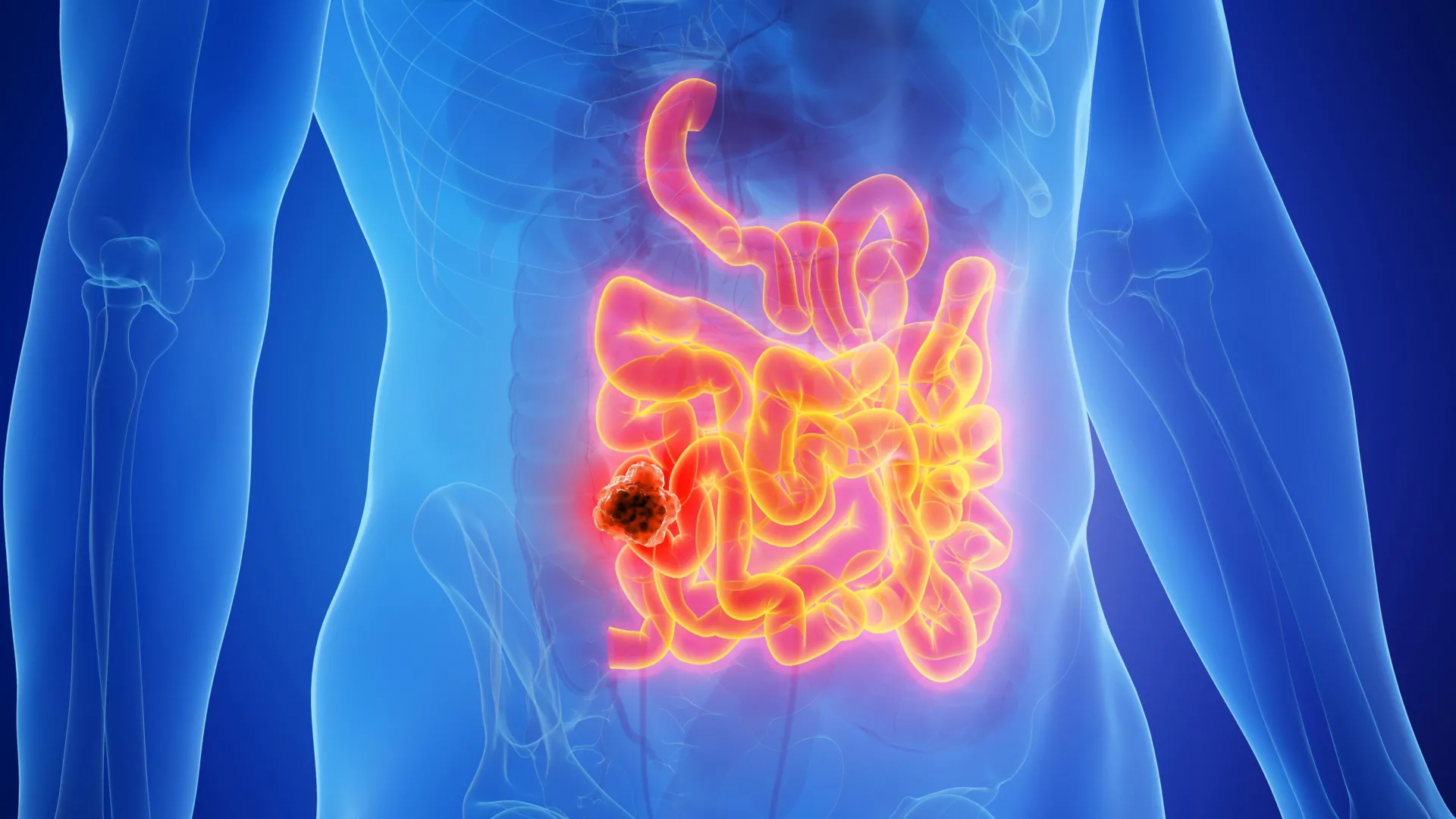
A ketogenic diet increased small-intestinal tumors in cancer-prone mice while reducing tumors in the colon, revealing a strikingly different response within neighboring parts of the gut. Researchers traced the increased risk not to ketones, but to the way intestinal stem cells processed the diet’s high levels of fat. That fat-burning activity pushed the cells to multiply more rapidly, potentially raising the chance of cancerous changes.

📅 2026-10-06 01:18:45    •    ScienceDaily
Why some Indigenous communities don't resist oil extraction in their territories
Science News

Why some Indigenous communities don't resist oil extraction in their territories

More than half of the Ecuadorian Amazon has been marked for oil drilling, overlapping with Indigenous territories and areas of high biodiversity. The ecological and cultural impacts of oil extraction are well documented and have fueled some of Latin America's most prominent environmental movements. Yet at the local level, extraction is not always met with resistance.

📅 2026-10-06 01:00:01    •    Phys.org
Global soil erosion outpaces natural recovery, report warns
Science News

Global soil erosion outpaces natural recovery, report warns

Isaac Larsen, an associate professor in the College of Natural Sciences' Department of Earth, Geographic, and Climate Sciences, is a lead author of "Status of the World's Soil Resources 2026," a new report produced by the Food and Agriculture Organization of the United Nations (FAO) that draws on recent scientific literature and contributions from hundreds of experts around the world.

📅 2026-10-06 00:40:02    •    Phys.org
Game simulator shows how math can guide decisions when resources are limited
Science News

Game simulator shows how math can guide decisions when resources are limited

In "Bloons Tower Defense," the goal is to stop balloons from reaching the end of a track by strategically placing towers along the route. These towers vary in cost, range and attack power, and they also take up valuable space. The game becomes increasingly difficult with each round. Where you place a tower therefore determines not only how effective it is now but also which options remain available later in the game.

📅 2026-10-06 00:00:01    •    Phys.org
'Digital ibuprofen' offers Chinese youth comfort through cute characters facing familiar struggles
Science News

'Digital ibuprofen' offers Chinese youth comfort through cute characters facing familiar struggles

In China, young people are encountering a myriad of challenges, from societal pressures around success to life in a highly surveilled society, that have led them to turn to the internet in search of a balm to soothe their pain. What has emerged is a host of content called "digital ibuprofen"—viewed as a way to numb the anxieties of modern living.

📅 2026-10-05 23:40:01    •    Phys.org
Attention can't be bought, so brands turn to memes
Science News

Attention can't be bought, so brands turn to memes

The funniest post you saw this week may not have come from a friend; it may have come from a brand. Whether it is Kohl's, Wendy's, or Netflix, brands are behaving more like internet users than traditional advertisers.

📅 2026-10-05 23:20:01    •    Phys.org
Unusual senses: The secret superpowers of amphibians and reptiles
Science News

Unusual senses: The secret superpowers of amphibians and reptiles

The Surinam toad is one of the strangest frogs on Earth. Flat-bodied, tiny-eyed and adapted to the murky waters of the Amazon basin, it hunts well despite having very poor vision. When a fish swims close, the frog suddenly opens its mouth and sucks the prey inside in a fraction of a second.

📅 2026-10-05 23:00:02    •    Phys.org
What a locust can teach us about how neuromodulators alter odor processing
Science News

What a locust can teach us about how neuromodulators alter odor processing

When you walk into a bakery and smell fresh cookies, the enticing smell draws you in. After you eat a handful of cookies, though, the same smell likely doesn't send you back for more. Researchers in the McKelvey School of Engineering at Washington University in St. Louis sought to determine the biological mechanisms in the brain that controllably alters odor-evoked behavior by using an unlikely model—a locust.

📅 2026-10-05 22:40:10    •    Phys.org
Rhinos and elephants can cause huge problems if reintroduced badly—here's how to get it right
Science News

Rhinos and elephants can cause huge problems if reintroduced badly—here's how to get it right

Moving large animals around is a seductive idea in conservation. If there are plenty of animals in one place and too few in another, moving some between the two seems an obvious solution. Sometimes it is. But with animals as large, mobile and socially complicated as elephants and rhinos, the move itself can turn out to be the straightforward part.

📅 2026-10-05 22:40:01    •    Phys.org
Quantum interactions may have locked early universe's fields into existing energy states
Science News

Quantum interactions may have locked early universe's fields into existing energy states

The universe may be trapped in its own comfort zone, and a researcher in the College of Engineering and Computer Science has helped explain why it cannot seem to leave. A new study suggests the universe could be locked into its current state by the same kinds of quantum effects that scientists study when trying to preserve fragile information inside a quantum computer.

📅 2026-10-05 22:20:09    •    Phys.org
Does increased childcare funding help mothers into work?
Science News

Does increased childcare funding help mothers into work?

Since Labor won the 2024 general election, policy focused on children in the early years—from birth to school age—and their parents has moved sharply up the political agenda.

📅 2026-10-05 22:20:01    •    Phys.org
Forests are dying along North Carolina's coast—and it's speeding up
Science News

Forests are dying along North Carolina's coast—and it's speeding up

A new study finds that coastal forest loss in North Carolina's Albemarle-Pamlico Peninsula began accelerating after 2010 and may still be speeding up. The study also found that North Carolina lost more than 20% of its coastal forest between 1985 and 2021.

📅 2026-10-05 22:00:10    •    Phys.org
Rare insect discovery reveals a new species from the dinosaur age
Science News

Rare insect discovery reveals a new species from the dinosaur age

Some 99 million years ago, during the age of the dinosaurs, a tiny insect belonging to a species previously unknown to science became trapped in tree resin. The resin hardened and turned into amber, and the fossil preserved within it has now enabled a team of researchers from the School of Zoology and The Steinhardt Museum of Natural History to identify and describe a new species: Cretodorus noonoo, or "Noo-Noo."

📅 2026-10-05 21:40:14    •    Phys.org
How psychopathic traits shape language
Science News

How psychopathic traits shape language

Popular culture often depicts people with psychopathy as cold, emotionless and hollow, but a recent University of Mississippi study found that the language associated with psychopathic traits is more complicated than often described.

📅 2026-10-05 21:40:09    •    Phys.org
Long-term logging experiment reveals how protecting the forest floor helps preserve soil carbon
Science News

Long-term logging experiment reveals how protecting the forest floor helps preserve soil carbon

Forest soils store an estimated 40% of the world's terrestrial carbon, but estimates suggest that around 15–30% of that soil carbon is lost when a forest is harvested. Tracking such losses can be tricky: wildfires, insects, disease and past forest management can all affect forest soil carbon stores, and tree type, climate and harvesting method can all affect how much carbon is lost.

📅 2026-10-05 21:20:15    •    Phys.org
Experts deem empowering neurologists and neurology trainees to perform lumbar punctures at bedside a worthwhile goal
Science News

Experts deem empowering neurologists and neurology trainees to perform lumbar punctures at bedside a worthwhile goal

Many medical specialties now require graduating doctors to be skilled in point-of-care ultrasound (POCUS) for diagnosing patients and performing procedures. POCUS uses a portable ultrasound device to help clinicians make fast, accurate medical decisions. The Accreditation Council for Graduate Medical Education lists this skill as an official milestone for graduation. Even though training is improving for its potential use in treating head, eye and nerve conditions, POCUS is only moderately used by neurologists dealing with some neurological conditions.

📅 2026-10-05 21:20:11    •    Phys.org