
Science News

Latest science news, discoveries and scientific developments.

Humans may not be as hardwired for violence as we thought
Science News

Humans may not be as hardwired for violence as we thought

A study comparing 100 primate species, including humans, suggests that everyday aggression and lethal violence did not evolve as part of the same simple behavioral spectrum. Species that frequently fight or show mild aggression are not necessarily more likely to kill rivals, while extreme acts such as infanticide and lethal attacks appear to follow their own evolutionary patterns.

📅 2026-10-07 03:22:55    •    ScienceDaily
Animals may have evolved 200 million years earlier than we thought
Science News

Animals may have evolved 200 million years earlier than we thought

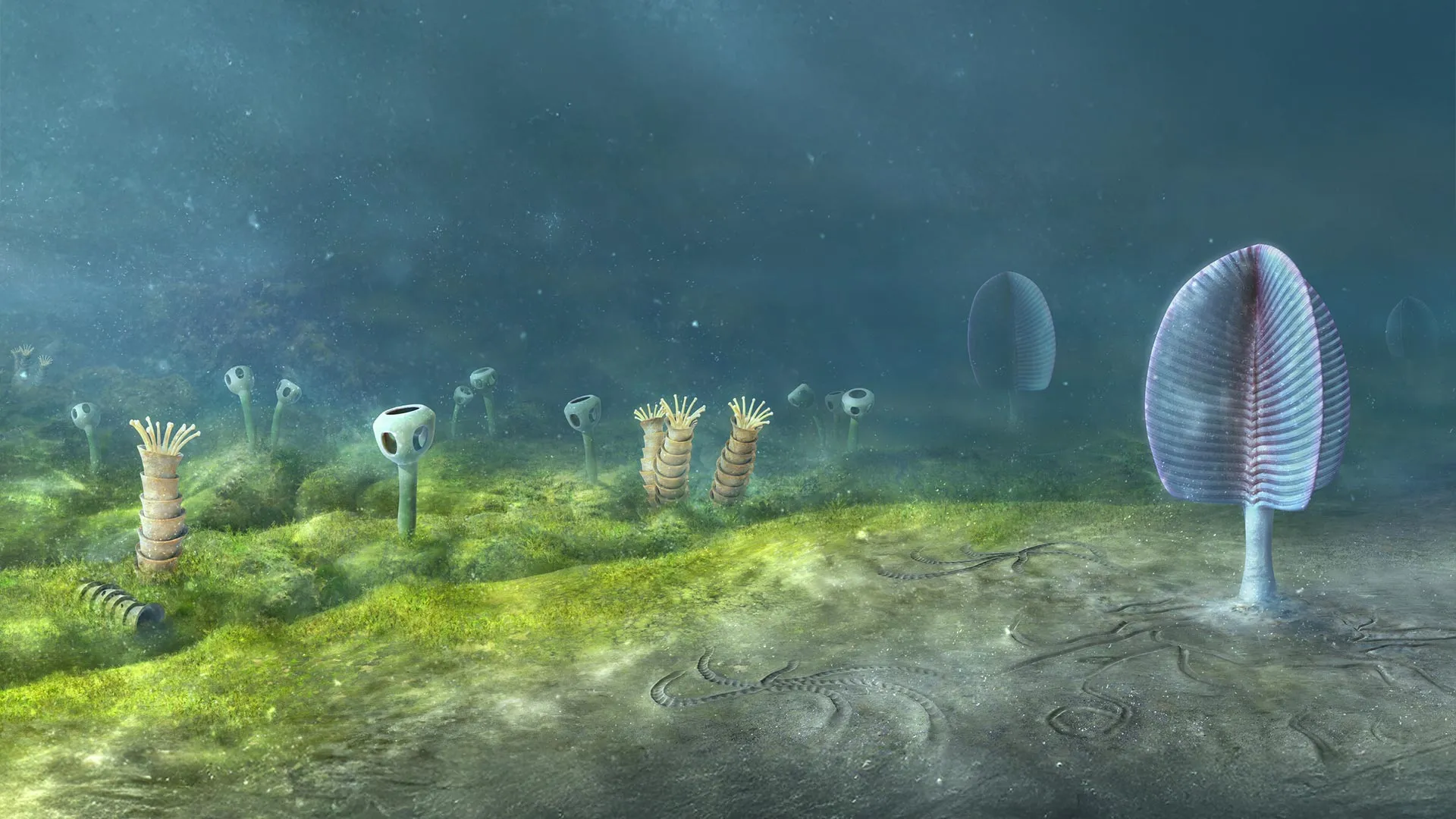
New research suggests animals could have evolved as early as 800 to 700 million years ago, roughly 200 million years earlier than some previous estimates. If so, the first animals may have lived before or during Snowball Earth, leaving behind little trace because their soft bodies were rarely preserved.

📅 2026-10-07 02:29:56    •    ScienceDaily
What happens in the brain when cannabis makes you anxious?
Science News

What happens in the brain when cannabis makes you anxious?

Cannabinoids may intensify anxiety by removing a natural brake on specific neurons in the brain’s fear center, particularly during stressful situations. In mice, shutting down those neurons sharply reduced cannabinoid-related anxious behavior.

📅 2026-10-07 01:26:07    •    ScienceDaily
Nobel winner Halzen says years of October 'misery' finally over
Science News

Nobel winner Halzen says years of October 'misery' finally over

Physicist Francis Halzen has an impressively long list of academic accolades—but every October, as the Nobel Prize rolled around, his failure to bag the biggest award of them all left him "miserable," he admits.

📅 2026-10-07 01:00:01    •    Phys.org
Computer scientist tracks satellites with automated observatory built from off-the-shelf technology
Science News

Computer scientist tracks satellites with automated observatory built from off-the-shelf technology

Allen Schnibben's interest in space started when he was a child. "I picked up some books about the solar system when I was in elementary school. In middle school, I got a telescope and I started observing the night sky as a hobby," said Schnibben, a computer scientist at Sandia National Laboratories. "My entire life, I've had an interest in space." Now, Schnibben collects data on satellites at Sandia's SOHBRIT facility, a 12-foot-wide (3.7-meter-wide) observatory.

📅 2026-10-07 00:20:01    •    Phys.org
'Quiet firing' linked to higher levels of 'quiet quitting' among employees
Science News

'Quiet firing' linked to higher levels of 'quiet quitting' among employees

A study of the oil, gas and petroleum industry has found that "quiet firing" by employers is associated with higher levels of "quiet quitting" among employees, while strong workplace relationships can weaken that effect. The research appears in the International Journal of Business Information Systems.

📅 2026-10-06 23:40:06    •    Phys.org
Linguists find Madonna's voice defies age-related expectations
Science News

Linguists find Madonna's voice defies age-related expectations

As women go through menopause, their voices tend to become deeper. This is partly because the vocal folds may swell and the surrounding muscles lose elasticity, resulting in a lower pitch. Age-related physiological changes can also affect the pronunciation of certain vowels.

📅 2026-10-06 23:40:01    •    Phys.org
Nearly 10,000 mapped reactions reveal overlooked steps in CO₂-to-fuel conversion
Science News

Nearly 10,000 mapped reactions reveal overlooked steps in CO₂-to-fuel conversion

Scientists are increasingly exploring carbon dioxide (CO₂) hydrogenation—where CO₂ reacts with hydrogen over a catalyst to produce products like methanol—to convert CO₂ into useful chemicals and fuels. However, it involves thousands of tiny chemical steps happening on the catalyst surface.

📅 2026-10-06 23:20:06    •    Phys.org
Sorghum may help European agriculture face climate change
Science News

Sorghum may help European agriculture face climate change

Research by INRAE and AgroParisTech suggests that global warming could have an overall positive effect on sorghum yields in Europe. Sorghum is a promising alternative to maize in livestock feed. Additionally, the crop requires less water and can tolerate higher temperatures. The researchers carried out simulations that used past climate data and future climate scenarios with the broader goal of developing new strategies for European agriculture. Their results were published in Earth's Future.

📅 2026-10-06 23:20:01    •    Phys.org
New crocodile species discovered in rocks used to build the Great Sphinx
Science News

New crocodile species discovered in rocks used to build the Great Sphinx

A new species of extinct crocodile from Egypt has been discovered, sharing more than just its home with the Great Sphinx. Herugavialis cairensis was found in the very same rocks used to build the iconic monument. And, just as the Sphinx is famously missing the tip of its nose, the fossil crocodile is also missing the tip of its snout.

📅 2026-10-06 23:00:07    •    Phys.org
From coral reef conservation to climate resilience: Turning Indonesia's marine wealth into global impact
Science News

From coral reef conservation to climate resilience: Turning Indonesia's marine wealth into global impact

For Dr. Jamaluddin Jompa, the ocean has never been simply a subject of scientific study. He was born in Takalar, a coastal region of South Sulawesi, Indonesia, and his connection with the sea was forged early. Witnessing the degradation of Indonesia's coastal waters made him wonder: What happens when the ecological relationships that sustain marine ecosystems begin to break down and, more importantly, can they be restored?

📅 2026-10-06 23:00:01    •    Phys.org
Chernobyl particles reveal unexpectedly stable nuclear fuel after 40 years
Science News

Chernobyl particles reveal unexpectedly stable nuclear fuel after 40 years

Four decades after the 1986 nuclear disaster, researchers at Leibniz University Hannover and the Helmholtz-Zentrum Dresden-Rossendorf (HZDR) examined six tiny, highly radioactive fragments that were released from the destroyed reactor in Ukraine in the wake of the incident. Analyses show that these "hot particles" are far more stable than had previously been assumed. The findings could allow for more precise assessments of the health risks posed by such radioactive particles. The paper is published in the Journal of Hazardous Materials.

📅 2026-10-06 22:20:05    •    Phys.org
Hydrothermal vents supply a geochemical precursor of ATP that could have powered early life
Science News

Hydrothermal vents supply a geochemical precursor of ATP that could have powered early life

Where did the energy come from to power the chemical origin of life, and how did phosphate come to be the universal energy currency of cells? Biologists from the Institute of Molecular Evolution at Heinrich Heine University Düsseldorf (HHU) have uncovered a new source of energy that drove primordial chemical reactions on the early Earth forward to kick-start metabolism. Their findings, now published in The FEBS Journal, identify phosphite and palladium, substances that naturally occur in H2-producing hydrothermal vents, as an inorganic precursor of ATP.

📅 2026-10-06 22:00:11    •    Phys.org