Science News

Latest science news, discoveries and scientific developments.

3D-printed scaffolds help turn waste methane into useful chemical using less power than liquid reactors
Science News

3D-printed scaffolds help turn waste methane into useful chemical using less power than liquid reactors

When landfills and wastewater treatment plants create methane as a byproduct, much of it is simply burned and its value is lost. But the gas is an energy-rich resource that could be recycled as a fuel, chemical feedstock or bioproduct. Capturing and converting waste methane offers an opportunity to recover energy and create useful products from an otherwise wasted gas stream.
📅 2026-09-24 21:00:01    •    Phys.org
Archaeologists discover 'tomb of the very highest rank' in 2,700-year-old Etruscan cemetery
Science News

Archaeologists discover 'tomb of the very highest rank' in 2,700-year-old Etruscan cemetery

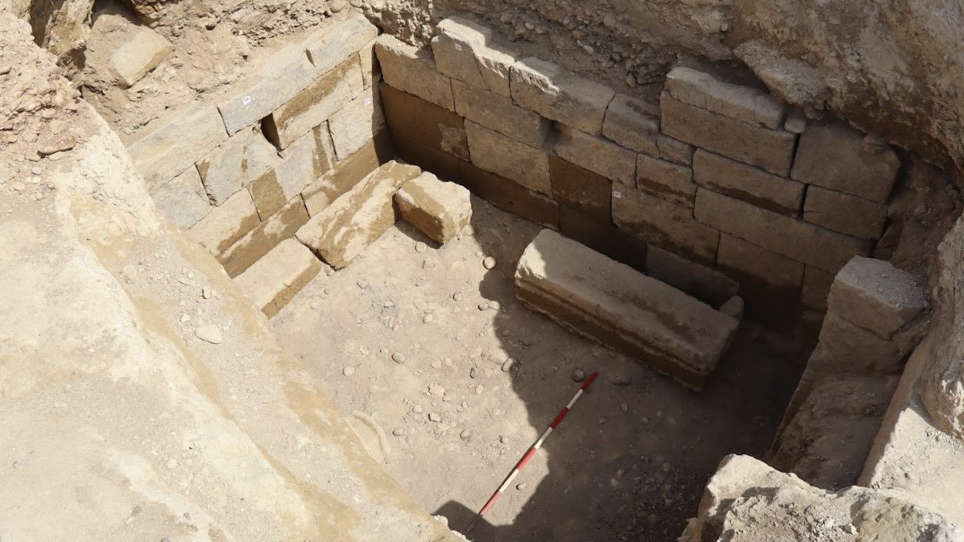
Archaeologists have unearthed a monumental 2,700-year-old tomb at Vulci, an important ancient Etruscan town north of Rome. Despite repeated attempts by tomb robbers to loot this burial over the centuries, the tomb still contained a massive collection of grave goods, including weapons, gold and bronze plates, chariot parts, a rare pair of women's shoes, and a complete banquet set.The burial, nicknamed the Tomb of the Stone Chamber, was excavated this summer, according to a translated statement from the Italian Superintendency of Archaeology, Fine Arts and Landscape for the Province of Viterbo and Southern Etruria (SABAP-VT-EM). But the discovery builds on work that French archaeologists carri...

📅 2026-09-24 20:59:43    •    Live Science
New findings explain how cells assemble machinery to repair damaged DNA
Science News

New findings explain how cells assemble machinery to repair damaged DNA

A cell's ability to repair its damaged DNA is one of the most fundamental processes in biology, helping protect us from diseases like cancer. Over the years, researchers have unraveled many of the mechanisms cells use to repair DNA, ultimately leading to precision cancer treatments.

📅 2026-09-24 20:40:11    •    Phys.org
AI-guided mutations help viruses infect bacteria up to 1 million times more effectively
Science News

AI-guided mutations help viruses infect bacteria up to 1 million times more effectively

Biochemists at the University of Wisconsin–Madison are using AI to tackle one of modern medicine's most pressing challenges: the rise of antibiotic-resistant bacterial infections. Using data collected in their lab, biochemistry professor Vatsan Raman and his team built an AI model to identify new possibilities for fighting bacteria with one of their natural enemies. Their findings, published in the journal Cell Systems, could help accelerate the development of alternatives to traditional antibiotic drugs.

📅 2026-09-24 20:30:01    •    Phys.org
First known case of Marfan syndrome discovered in feline siblings
Science News

First known case of Marfan syndrome discovered in feline siblings

Researchers at the College of Veterinary Medicine and the Baker Institute of Animal Health have published the first molecular characterization of Marfan syndrome in domestic cats in a paper in the Sept. 19 issue of Scientific Reports.

📅 2026-09-24 20:20:08    •    Phys.org
Shared blueprint in aphid proteins helps AI predict their structures
Science News

Shared blueprint in aphid proteins helps AI predict their structures

Tiny insects called aphids inject hundreds of mysterious proteins into plants, hijacking the plants' own genomes to build galls: structures made of plant tissue but constructed to the insects' specifications to house and feed their offspring.

📅 2026-09-24 20:10:01    •    Phys.org
NASA to study human health and performance during Crew-13 mission
Science News

NASA to study human health and performance during Crew-13 mission

During NASA's SpaceX Crew-13 mission aboard the International Space Station, astronauts will support a series of biomedical and human performance investigations, including a new collaborative effort to study how spaceflight affects blood flow and clotting. NASA also is testing crew members' manual piloting skills, evaluating methods to counter vision and brain changes, gathering essential health data to inform future missions, and measuring forces astronauts experience during their return to Earth to help refine re-entry hardware and procedures.

📅 2026-09-24 20:00:05    •    Phys.org
Picosecond pulses push superconductors beyond their critical-current limit
Science News

Picosecond pulses push superconductors beyond their critical-current limit

Superconductors can carry electrical current without resistance, but only up to a maximum value known as the critical current. The critical current is a crucial figure of merit for applications, and materials science has long been focused on increasing this limit. Researchers at the Max Planck Institute for the Structure and Dynamics of Matter (MPSD) have now shown that, in type-II superconductors, this conventional limit can be exceeded when the current is applied for only a few picoseconds.

📅 2026-09-24 20:00:01    •    Phys.org
Engineers just designed a better 'shock absorber' for spacecraft
Science News

Engineers just designed a better 'shock absorber' for spacecraft

Rocket launches are among the most violent ways humans have devised to travel. They generate millions of pounds of thrust and subject passengers to intense g-forces. Humans must undergo serious training to withstand those forces, while machines must be designed to survive them. If a delicate mirror or solder joint cracks before a multibillion-dollar satellite even begins its mission, the years of effort that went into its design and assembly could be lost. Now, researchers in Switzerland have come up with an ingenious way to make that less likely.

📅 2026-09-24 19:40:04    •    Phys.org
Scientists find a carbon cycle hiding in desert minerals
Science News

Scientists find a carbon cycle hiding in desert minerals

On the surface, the arid expanses of the Mojave Desert may seem inhospitable and largely removed from the global carbon cycle. But beneath the surface, its mineral-rich soils are running a carbon cycle of their own—one that could account for a surprisingly large share of the planet's annual carbon exchange.

📅 2026-09-24 19:40:01    •    Phys.org
Machine learning helps identify chemicals that repel honey bees from pesticides
Science News

Machine learning helps identify chemicals that repel honey bees from pesticides

In a win for pollinator conservation, researchers at the University of California, Riverside, have developed a machine learning-based method to identify chemical compounds that can safely repel honey bees from pesticide-treated crops. The research offers a potential solution to one of agriculture's most urgent ecological challenges: the ongoing decline in honey bee populations, driven in part by pesticide exposure. The paper is published in the journal eLife.

📅 2026-09-24 19:30:01    •    Phys.org
Gut bacteria-derived metabolite extends the lifespan of fruit flies
Science News

Gut bacteria-derived metabolite extends the lifespan of fruit flies

Gut microbiota influence multiple aspects of host physiology, including metabolic and immune functions. Many metabolites produced by gut bacteria can cross the intestinal epithelium (which the bacteria may not be able to cross) and enter host tissues, providing a pathway through which microbial activity can influence host physiology. However, determining the specific contribution of individual gut bacterial metabolites to host lifespan has remained challenging.

📅 2026-09-24 19:20:09    •    Phys.org
Vertical quantum sensor could reveal nanoscale magnetic patterns in quantum materials
Science News

Vertical quantum sensor could reveal nanoscale magnetic patterns in quantum materials

Quantum materials do things ordinary materials cannot. They carry current without any loss, or conduct only along their outer edge while the inside insulates. Future quantum computers and quantum sensors will run on materials like these. To improve them, researchers need to see exactly where currents and magnetic fields run at the nanoscale.

📅 2026-09-24 19:20:06    •    Phys.org
Dogs pay more attention to consonants than vowels when we speak
Science News

Dogs pay more attention to consonants than vowels when we speak

A dog being prepared for an EEG measurement by researcher Boglárka MorvaiSarolta Szilágyi When dogs hear their owners speak, they are listening for consonants in words rather than vowels, a new study suggests, apparently mimicking a similar human bias that is found across many languages. Although dogs don’t have language, they live in a speech-rich environment, says Attila Andics at Eötvös Loránd University in Hungary. “We knew from our previous studies that dogs care about what we speak and how we speak, but until now there was no evidence that dogs’ experience with speech can actually shape how their brains function,” says Andics. Advertisement if( window?.adverts?.addToArray ) { window.ad...

📅 2026-09-24 18:00:00    •    New Scientist
Copying others can help young orangutans build a broad diet
Science News

Copying others can help young orangutans build a broad diet

A Sumatran orangutan mother uses a stick tool to extract honey from a large tree holeGuilhem Duvot, SUAQ Project Young orangutans who spend little time working out for themselves how to build a broad diet can partly compensate by watching how other orangutans choose what to eat. The findings suggest that orangutans have different strategies for developing broad survival skills, says Revathe Thillaikumar at the Max Planck Institute of Animal Behavior in Germany. Young orangutans acquire a substantial body of knowledge before they can survive independently, which they must do by the time they are 8.5 years old. This includes understanding what foods are safe to eat, where to find them and how ...

📅 2026-09-24 18:00:00    •    New Scientist
Rare armored dinosaur found in Japan may have ancestors that migrated across a land bridge 100 million years ago
Science News

Rare armored dinosaur found in Japan may have ancestors that migrated across a land bridge 100 million years ago

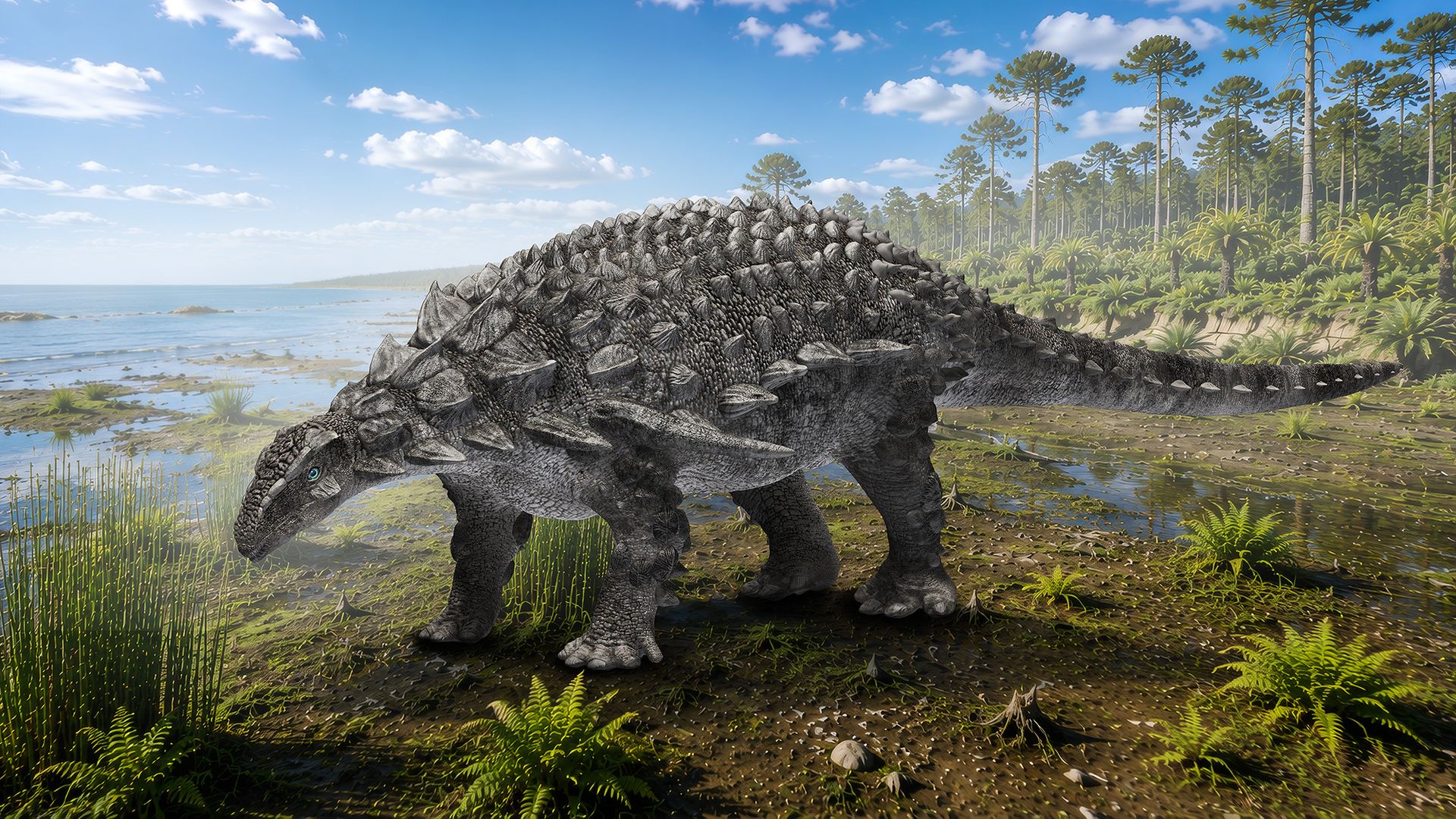
Rare fossils discovered in Japan more than 30 years ago are from a new species of armored dinosaur — one whose ancestors likely reached Asia by trekking across a land bridge, a new study finds.The newly named dinosaur, a type of nodosaurid, is now one of just three species of its kind found in Asia to date. The scarcity of nodosaurids in Asia, and the fact that the newly described beast is similar anatomically to those from North America, hint that its species likely arose from a migration from North America to Asia via the Bering Land Bridge, an ancient strip of land that connected present-day Alaska and Russia, researchers reported in the February 2027 issue of the journal Cretaceous Resea...

📅 2026-09-24 17:42:28    •    Live Science