Science News
Vox’s Unexplainable and Scientific American explore the mystery of dark matter and the limits of science
What if the universe’s biggest mystery has no answer?
Latest science news, discoveries and scientific developments.
What if the universe’s biggest mystery has no answer?
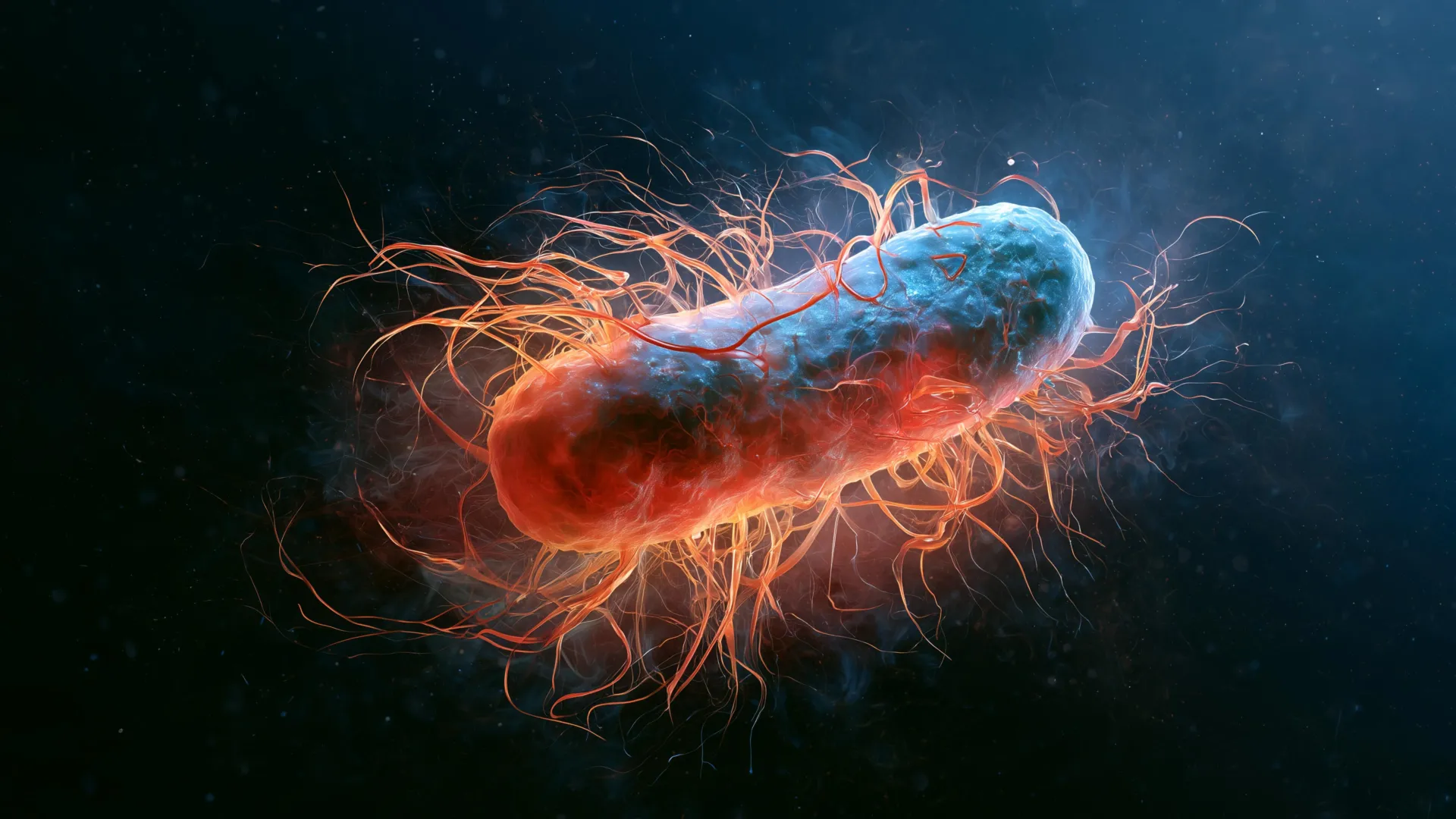
A magnet-producing bacterium extended the average lifespan of C. elegans worms by more than 43% while helping protect their neurological and intestinal health. Researchers traced much of the effect to suppression of ferroptosis, a damaging form of cell death linked to iron buildup and oxidative stress.
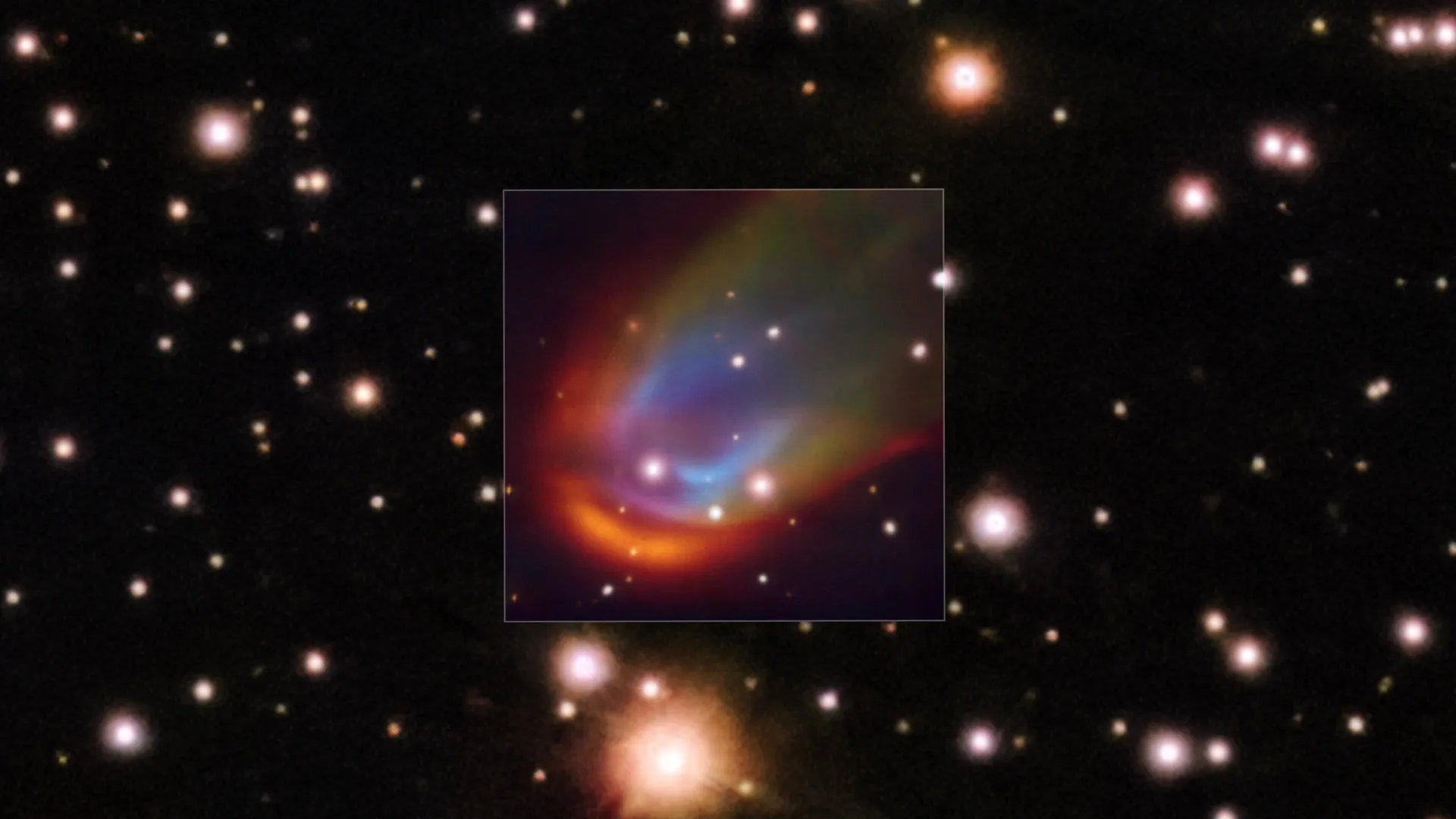
A dead white dwarf with no detectable disk has somehow produced a powerful shock wave that appears to have persisted for at least 1,000 years. Its magnetic field may be partly responsible, but astronomers say an unexplained “mystery engine” may also be at work.
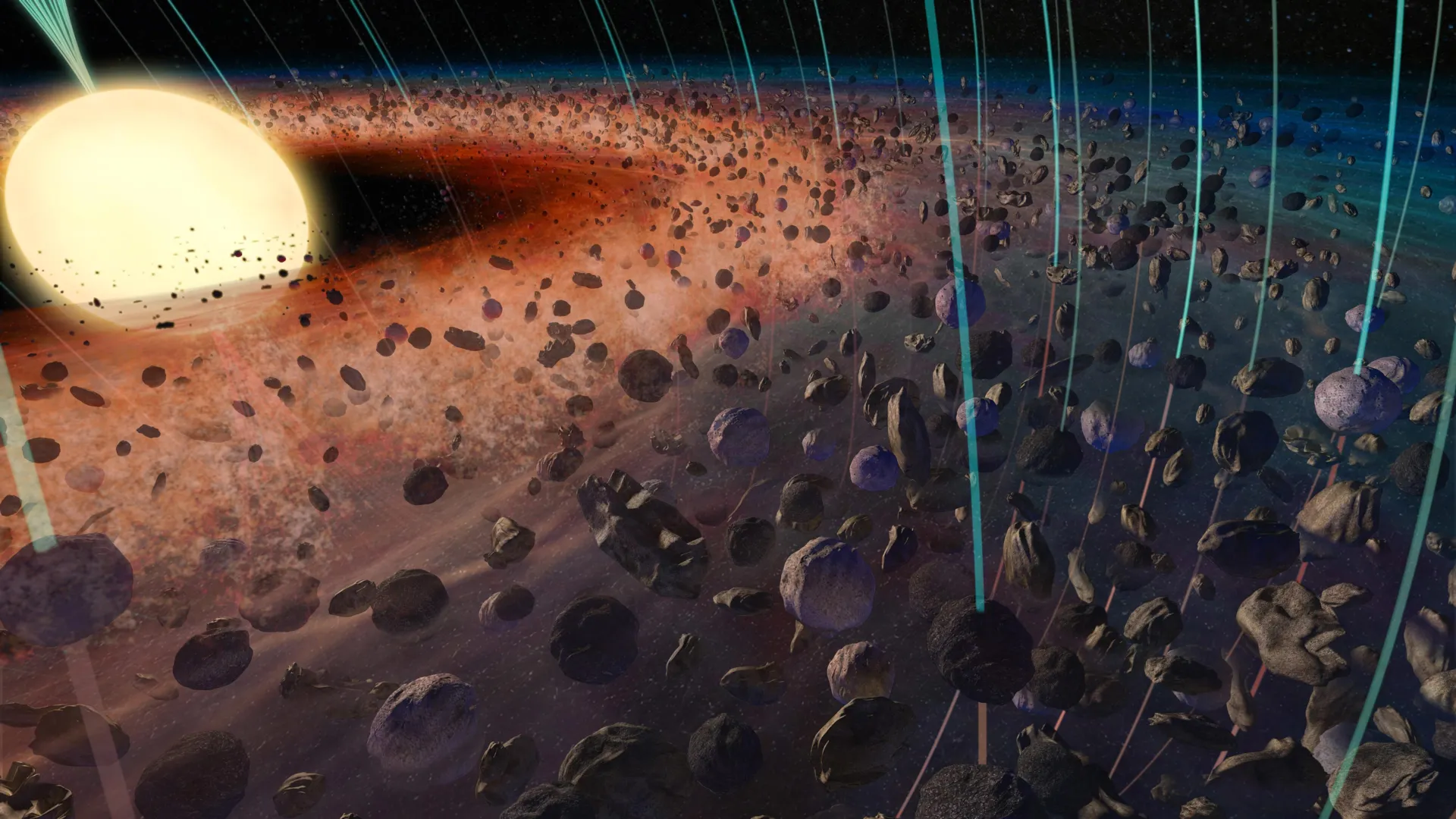
Ancient grains inside one of the oldest known meteorites reveal that a surprisingly strong magnetic field existed during the solar system’s first 200,000 years. The discovery suggests magnetism worked alongside gravity to help transform a vast cloud of gas and dust into the sun and planetary disk.
Scientists discovered a surprising backup system that lets mammalian cells make the essential amino acid cysteine even when the pathways once considered indispensable are disabled. The same survival mechanism may help cancer cells resist treatment, raising the possibility that shutting it down could make tumors easier to kill.

A severely deformed 1834 British silver sixpence preserves physical evidence most consistent with an unusual minting anomaly, according to an IA STUDIO study published in npj Heritage Science. The coin was individually marked £8 in a mixed coin album at a flea market in Greater Manchester. The album was later acquired as a bulk lot, rather than the sixpence being purchased separately for £8.

Literacy promotion programs, combined with community-based support programs, can affect literacy development in Latino children from birth to 18 months of age, Rutgers researchers have found.

A new study from UCLA provides insights into how the January 2025 Eaton fire affected air quality downwind, showing how levels of toxic airborne contaminants spiked and then dissipated as the burning died down. The research is published in the journal ACS ES&T Air.

Rainfall from Hurricane Helene produced a short-term spike in microplastics at three sites in western North Carolina, with microplastic deposition three to 22 times higher than before the storm.

In the search for extraterrestrial life, it makes sense to first look for rocky planets with an atmosphere, like Earth. Without an atmosphere, a planet can't have surface water. But of the more than 6,300 exoplanets cataloged thus far, the vast majority are not rocky, and only a handful of the rocky worlds appear to have an atmosphere.

A new study from the University of Bath sheds light on critical U.S. intelligence failures ahead of the 9/11 attacks, including evidence that changes how the CIA's repeated failure to share information with the FBI about two hijackers should be understood.

Curtin University scientists have uncovered an important missing piece in the puzzle of how some coral reefs can recover from climate events, providing information that could help guide future conservation and restoration efforts.

With deepfakes on the rise, forgery and deception are often viewed as distinctly modern problems—a new era of misinformation made possible by artificial intelligence. One of the first alarming cases occurred at the start of the war in Ukraine, when a doctored video appeared to show President Volodymyr Zelenskyy telling his soldiers to lay down their weapons.

Coastal flooding may seem unpredictable, a natural disaster that occurs randomly. But UCF researcher Ivan Haigh has found that recurrent coastal floods occur at highly predictable times.

The University of Rhode Island has made one of the world's longest-running beach survey efforts available online through Rhode Island Beach Dynamics Over Decades, a new public website.

As Arctic sea ice retreats, new shipping routes, expanding resource development and growing geopolitical competition are transforming one of the world's least-monitored regions. Scientists at Los Alamos National Laboratory have established one of the first long-term acoustic baselines for the Arctic's underwater soundscape. This work strengthens the detection and interpretation of earthquakes, underwater and nearshore detonations, ship traffic and other events of national security interest.

A South Korean research team has developed an environmentally friendly ammonia synthesis process that reduces carbon emissions using a membrane that selectively transports hydrogen.

Strike a bell, and it rings with a pitch and a fading that tell you about the bell: its size, its shape, the metal it is made of. Black holes ring too. When two merge, the newborn black hole shivers and sheds gravitational waves in a brief, dying chord, and since 2015, gravitational-wave detectors have been listening. The notes of that chord, which physicists call quasinormal modes, depend only on the black hole's mass and spin and on the law of gravity itself. Change the law, and the chord changes.

A modeling study involving researchers from Sultan Qaboos University found that sea surface temperature and Oman's terrain influenced simulations of Tropical Cyclone Shaheen through different mechanisms, affecting its intensity, track and rainfall distribution. The researchers chose Tropical Cyclone Shaheen, which directly affected northern Oman in October 2021, as a case study to examine how changes in environmental and surface conditions influence regional weather model simulations.

In her doctoral dissertation, M.Sc.Admin. Liisa Varumo examines the environmental justice of market-based and place-based conservation approaches and how these approaches can contribute to just sustainability transformations in biodiversity conservation.